




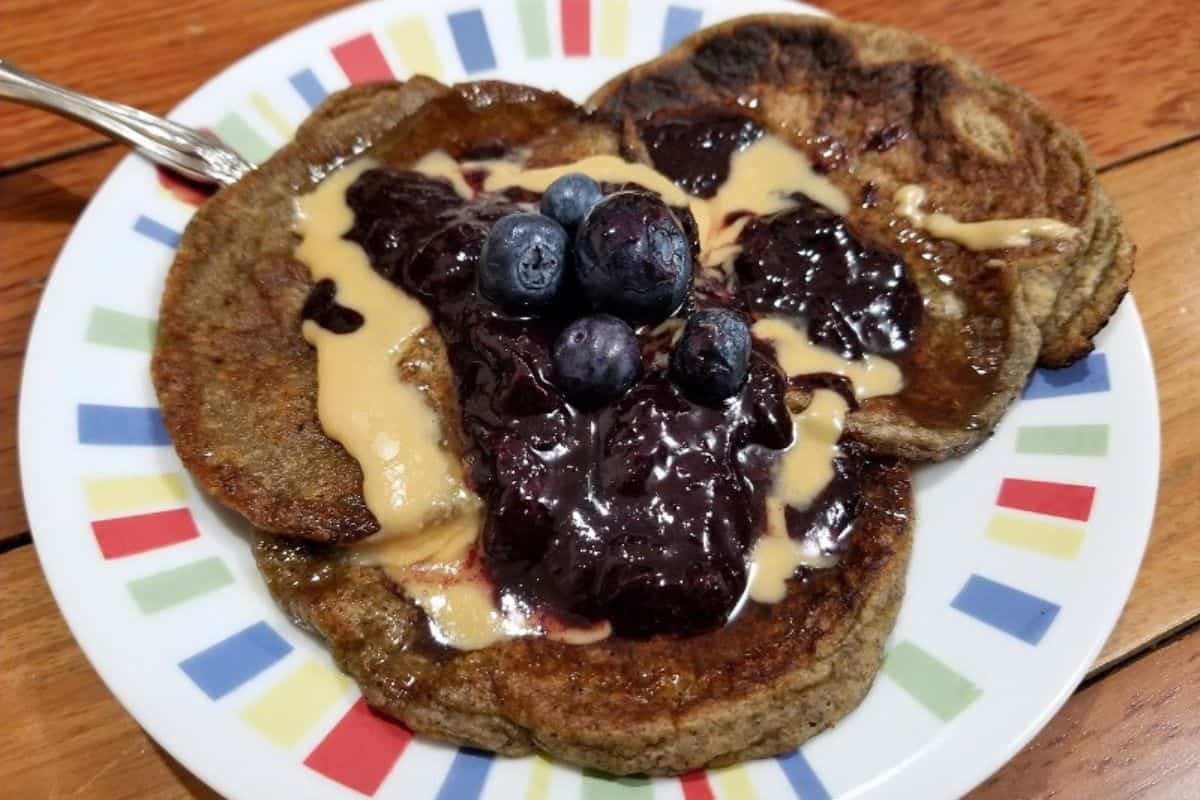
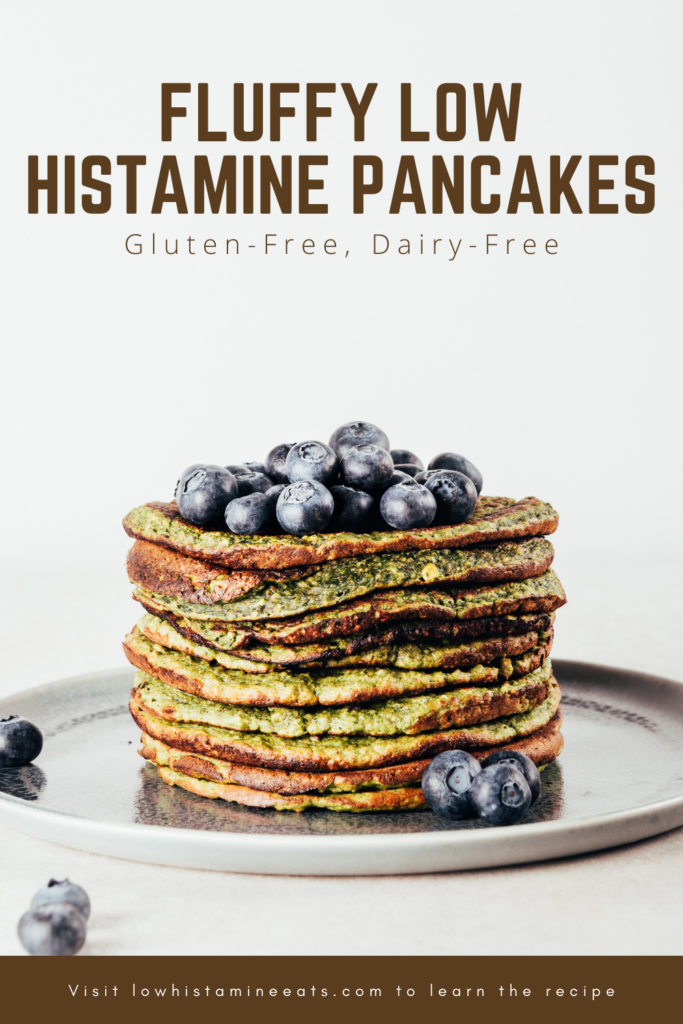
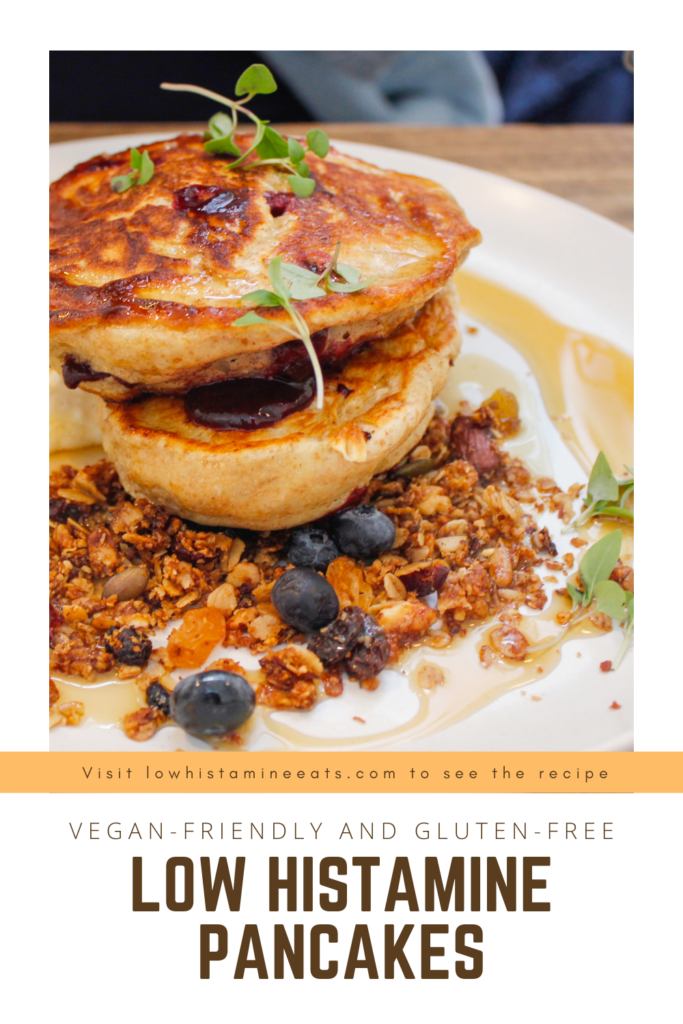
These Gluten-Free Oat Milk Pancakes (Dairy-Free, Egg-Free) are super fluffy on the inside but a bit crunchy on the outside, though admittedly, they can be a bit delicate. Whether you tend to have dessert for dinner or are just in search of a low histamine breakfast, these low histamine pancakes will definitely hit the spot.
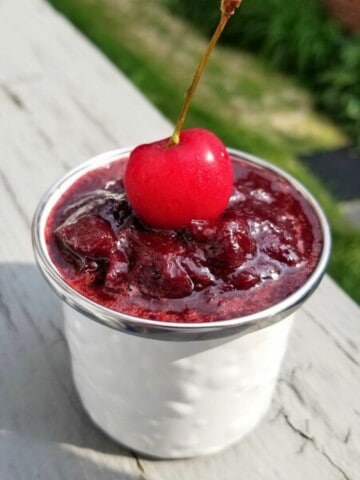
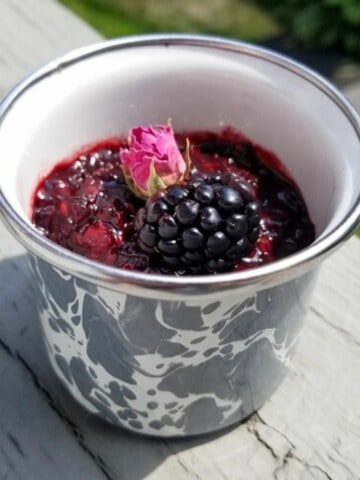
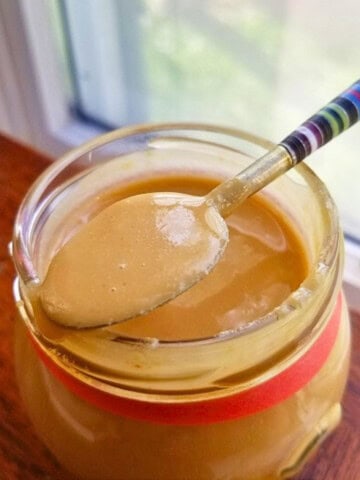
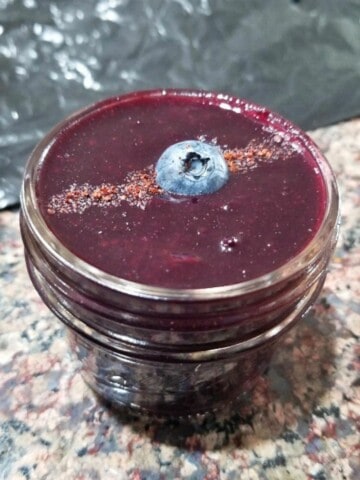
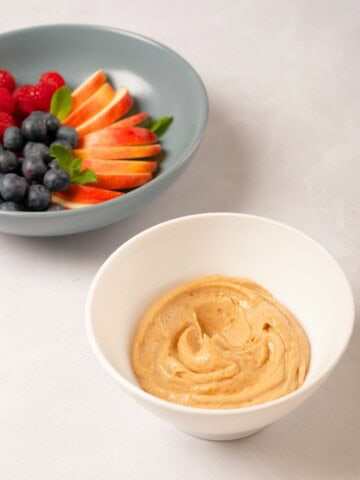
These pancakes are best paired with my macadamia nut butter or any of my fruit jam recipes on the site.
Jump to:
✔️ Why This Recipe is Great
Freezer-Friendly Oat Milk Pancakes. For months I was craving pancakes, but all the low histamine pancake recipes I've found have been too dense, so I set out to make my own with a somewhat lighter blend of low histamine flours, and this was the (*fifth* &) final iteration.
Savory & Sweet. Much like my chestnut flour crepes, these definitely teeter on the edge between sweet and savory, especially if you add protein powder. The trick to making them so fluffy is to keep the heat on medium-low or low, otherwise you'll cook the outside too quickly.
Super Versatile. These vegan oat milk pancakes are SO amazing with a touch of maple syrup and jam or nut butter, and if you can tolerate it, real butter or ghee.
🧈 Ingredients
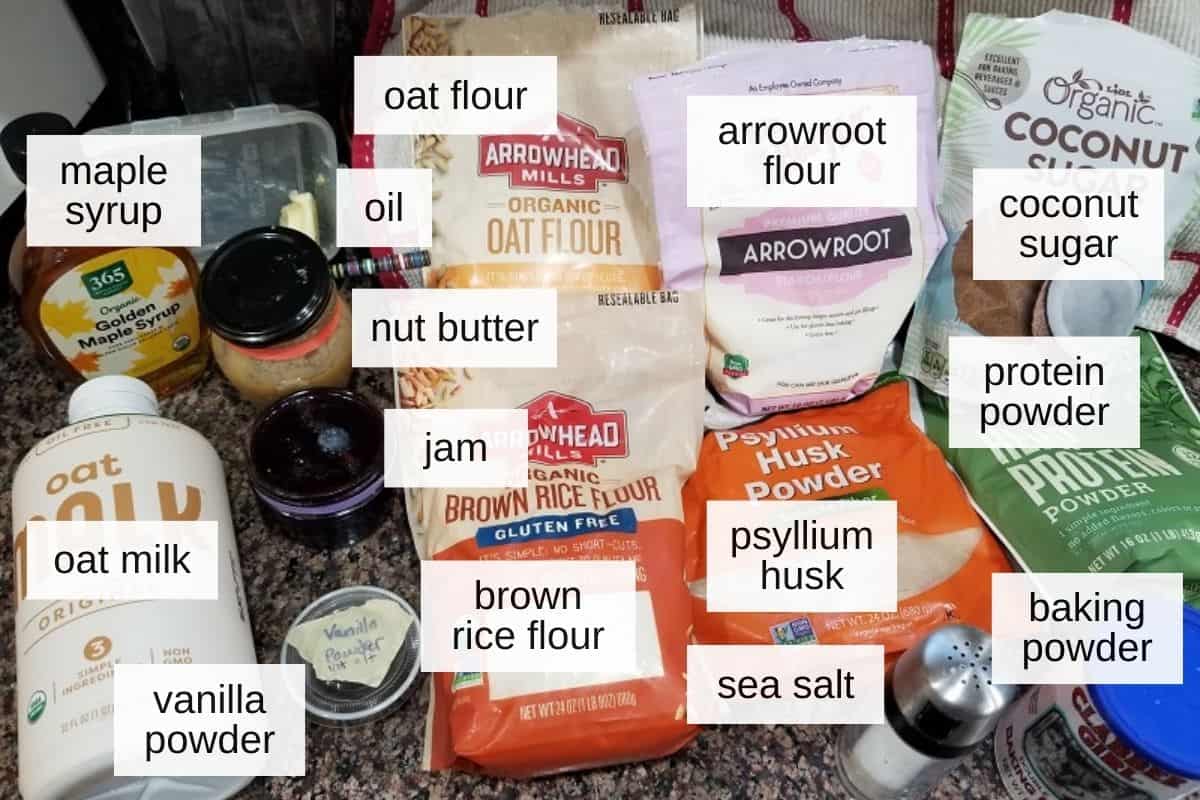
Flax Meal (Flax Egg) or Psyllium Husk: you can use either of these plant products to replace the egg normally needed in pancakes. After about 5 minutes, the flax meal will combine with the water and form a gel-like egg substitute known as a 'flax egg.' I use this a lot in recipes so I've gotten used to making them, but the general rule is that 1 Tablespoon of flax meal + 2.5 Tablespoons of water is equal to one egg.
White or Brown Rice Flour: You'll quickly realize that either brown or white rice flour is usually the base for a gluten-free flour blend, which should clue you in on its potential. But I've never really noticed a flavor or texture difference between them, so I always buy the "healthier" option of brown rice flour, so do whatever you tolerate best. Just DON'T use sweet rice flour, which is much more glutinous and would change the texture.
Oat Milk: You can use any flour blend to make these oat milk pancakes, but using any other type of milk will lend a different flavor to the 'cakes, so I recommend using a clean ingredient or homemade oat milk for pancakes.
Oat Flour: this is a great flour to use in sweeter recipes, especially when making something to pair with fruits or cream, as its flavor blends well into the background of recipes.
Arrowroot Starch: this root-derived starch is also known as arrowroot flour, a low histamine flour which acts as a thickener for these gluten-free, dairy-free pancakes.
Baking Powder: NOT the same as baking soda, baking powder is a weakly acidic riser used in baking, and will help with the fluffiness of the 'cakes.
Coconut Sugar: this is a lower-glycemic, lower histamine sweetener that adds a nice toasty flavor to the final pancakes.
Frying Oil: While I used butter, since it doesn't bother my lactose intolerance, you could actually use any type of neutral oil for these pancakes, such as coconut oil or even olive oil.
See recipe card for exact ingredients and quantities.
🥞 How to Make Oat Milk Pancakes: step-by-step instructions
Step 1. The first thing you need to do is prepare your egg replacement. If you'd prefer to use a regular egg, skip this very long step and omit the flax seed and the 3 Tablespoons of water. If using flax, in a large bowl, measure out 1 Tablespoon of flax seed meal.
In another bowl or cup, measure out 3 Tablespoons of water, and grab a small hand blender or milk frother. Pour the water into the large bowl with the flax meal and immediately blend everything until well-combined. The powder will immediately begin to congeal and turn into your flax egg, so you need to stir quickly & thoroughly.
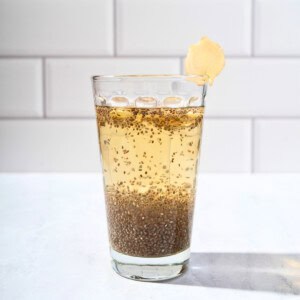
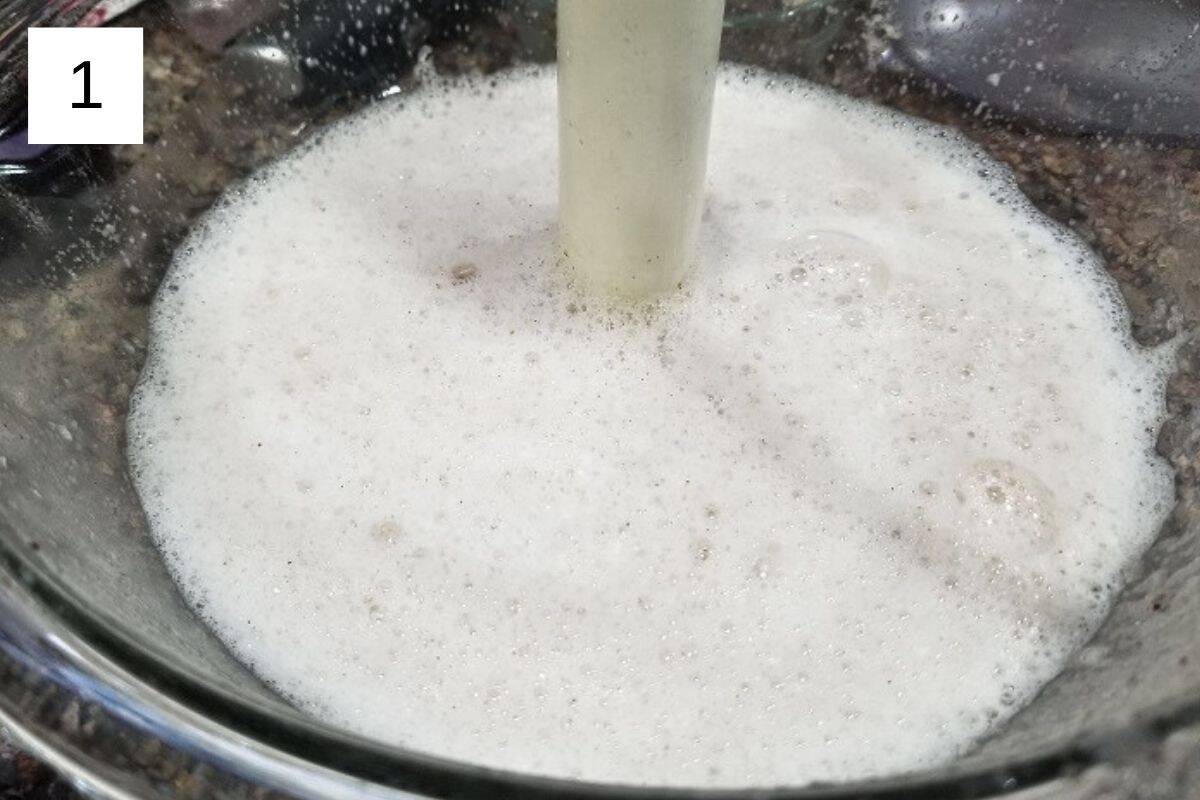
If using psyllium husk powder (pictured above), measure out your 2 ½ cups oat milk and 3 Tablespoons of water into a large bowl, then grab an immersion blender. Add your tablespoon of psyllium husk powder to the liquid and immediately blend everything thoroughly. Set aside your egg replacement (image 1).
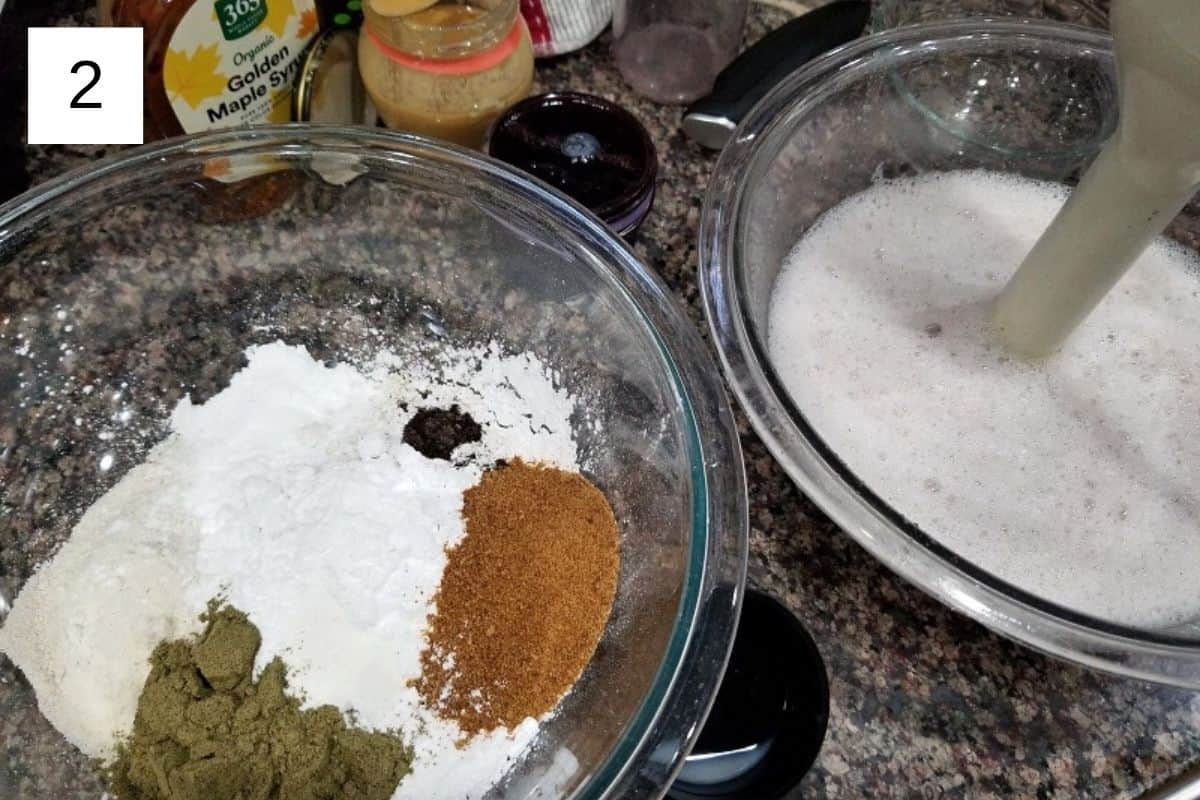
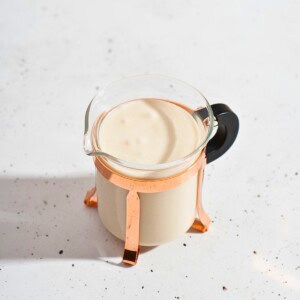
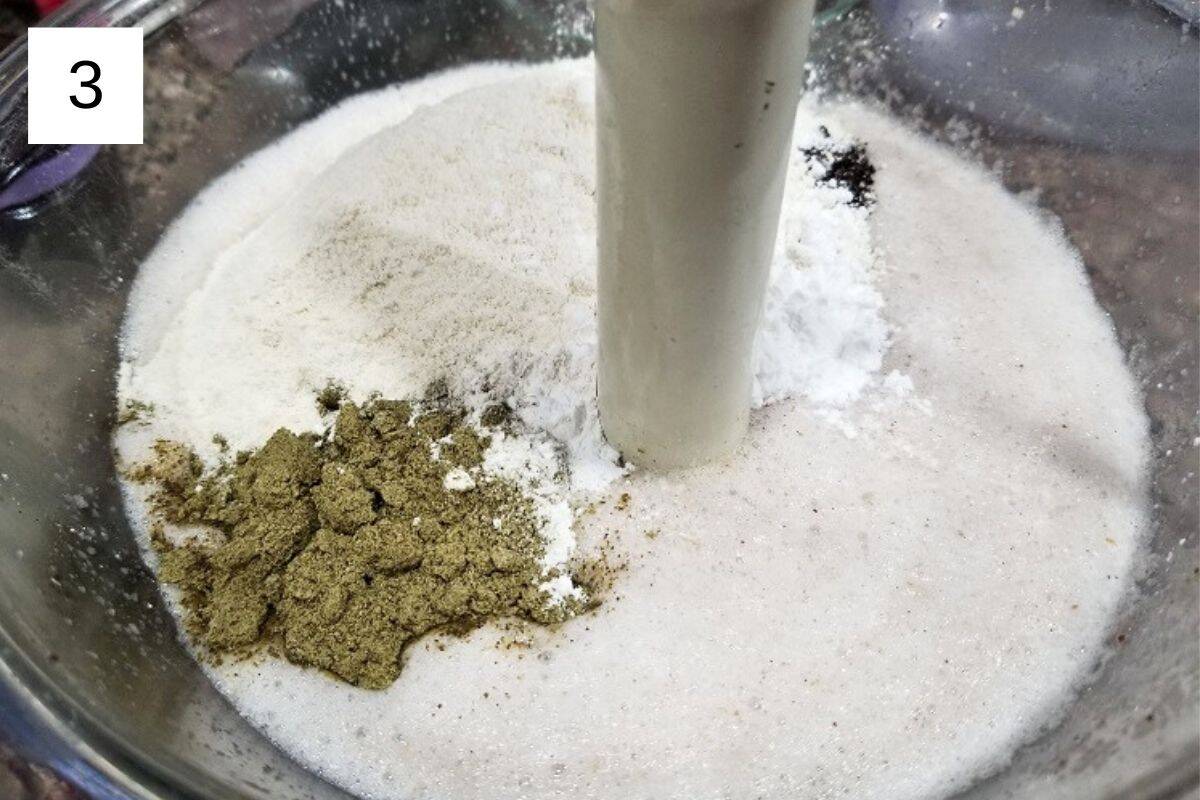
Step 2. Now measure out all your dry ingredients into another bowl: brown rice flour, oat flour, arrowroot flour, sea salt, vanilla powder, baking powder, coconut sugar, and protein powder (if using) (image 2). Pictured here is hemp protein powder (the green stuff), which did end up darkening the final pancakes.
Step 3. Your egg replacement should only take 2-3 minutes to finish thickening, so once you've measured your dry ingredients, add the oat milk to your flax egg and combine well. If you made a psyllium egg, your oat milk was already added.
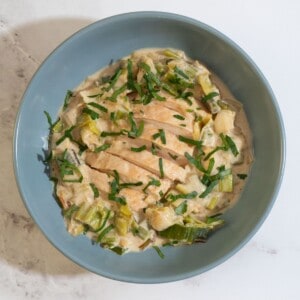
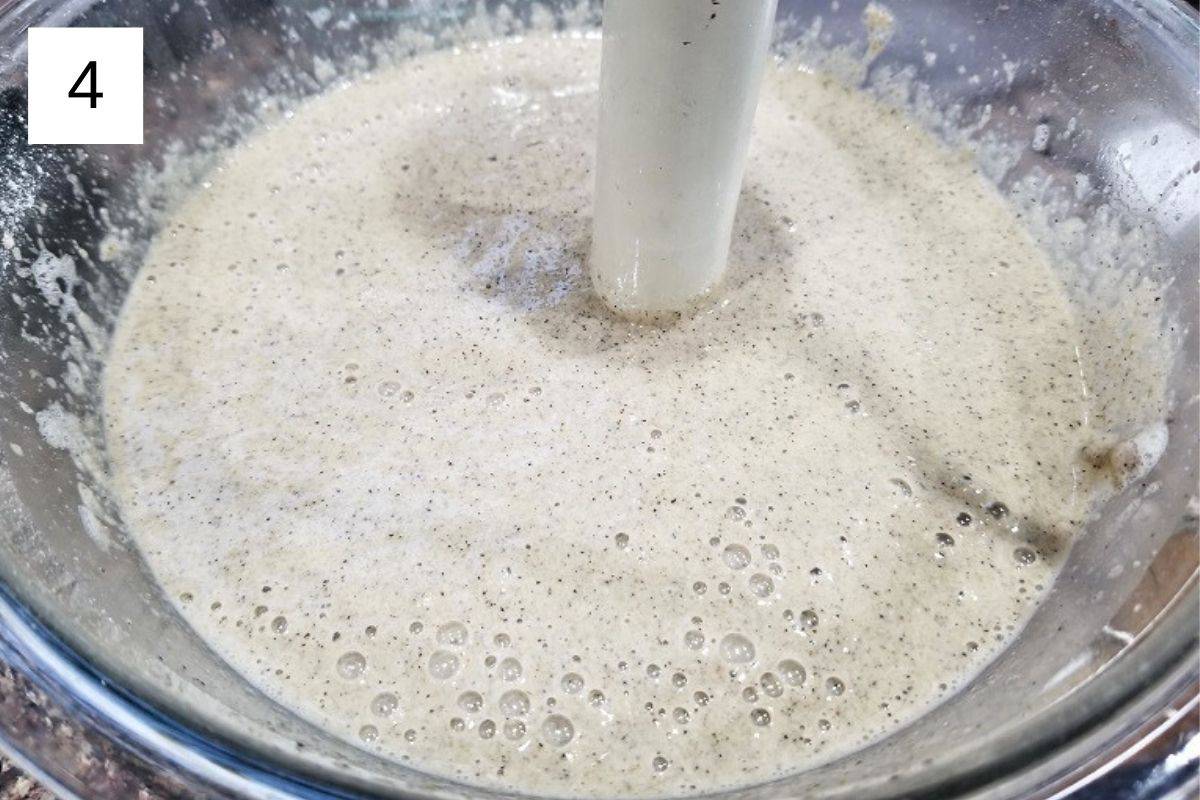
Step 4. Now turn on medium-low heat under your pancake pan, and start it warming on the stove. While that heats up, add all your dry ingredients to the liquid and combine well (images 3 & 4), which should take about 30 seconds to a minute.
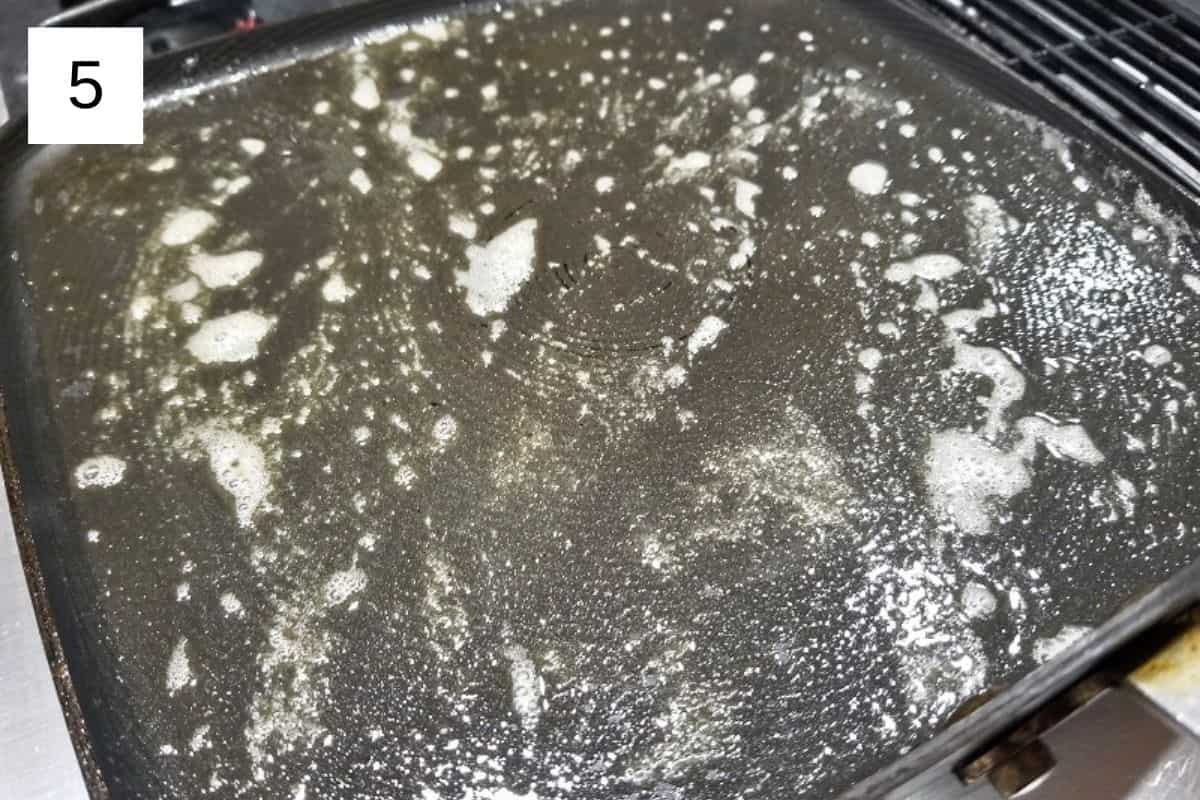
Step 5. Once the batter is well-combined, add a Tablespoon or so of butter or coconut oil to your pan and let it melt for 30 seconds (image 5).
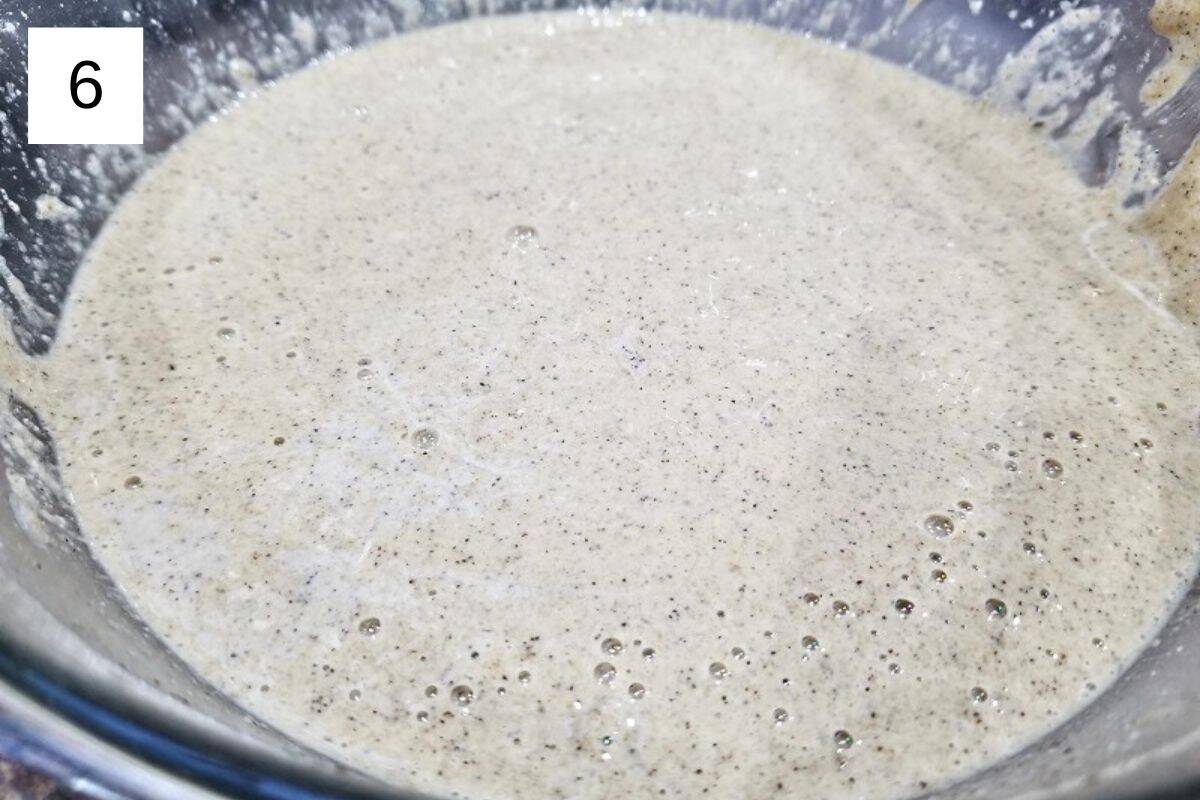
Step 6. Once the oil has melted, spoon about a quarter cup of batter per pancake onto your hot pan, where you melted the butter or oil. Allow the pancakes to cook on this first side until there are a lot of small bubbles forming on the surface, about 4-5 minutes (images 6 & 7). If you try to flip them too soon, they'll fall apart.
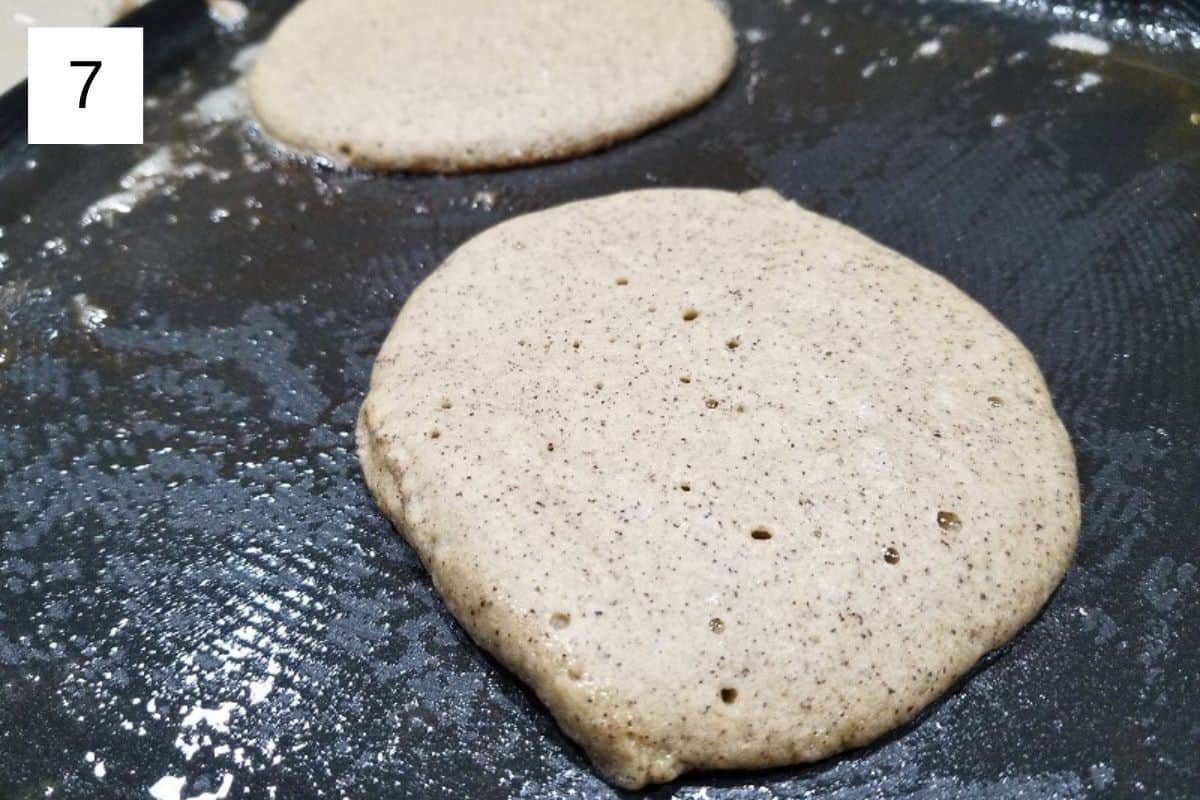
Step 7. When you flip the 'cakes they should be browned on the other side (image 8), and if they're not, give them more time on that side. You have to be a bit delicate with these, as part of the fluff comes form the use of baking powder, which creates delicate air bubbles.
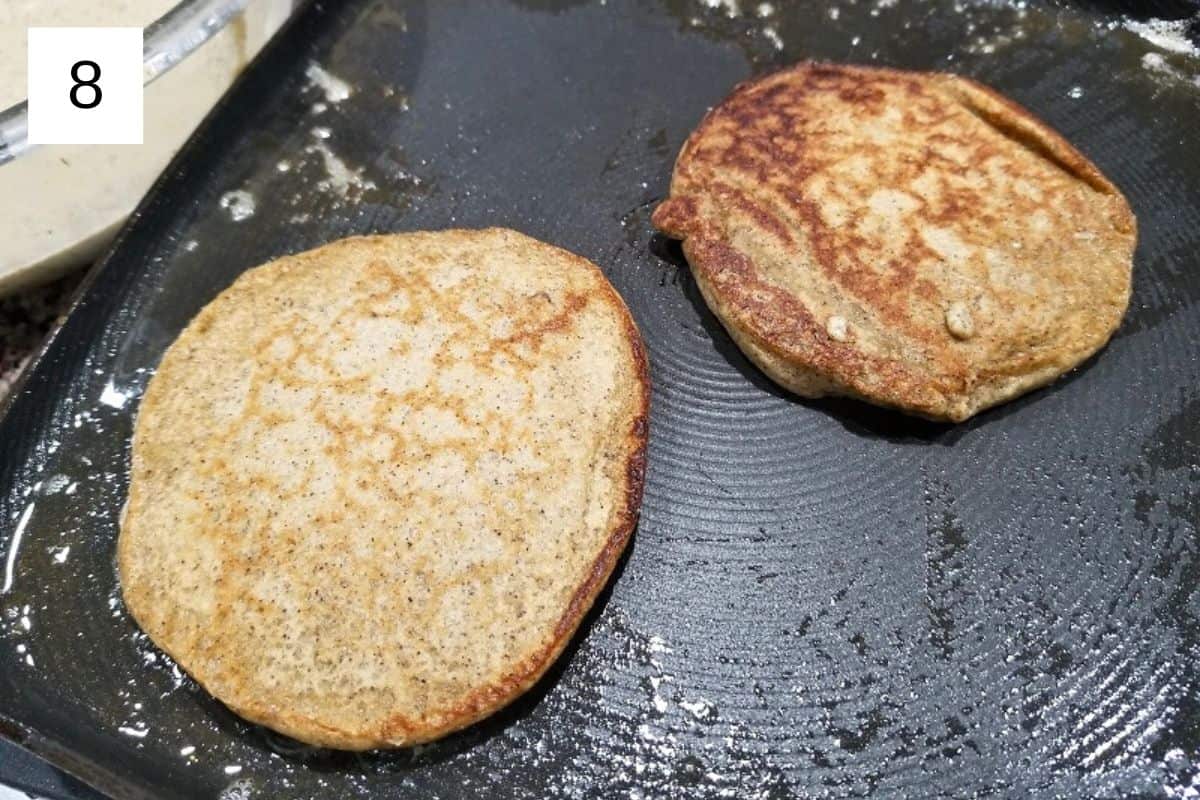
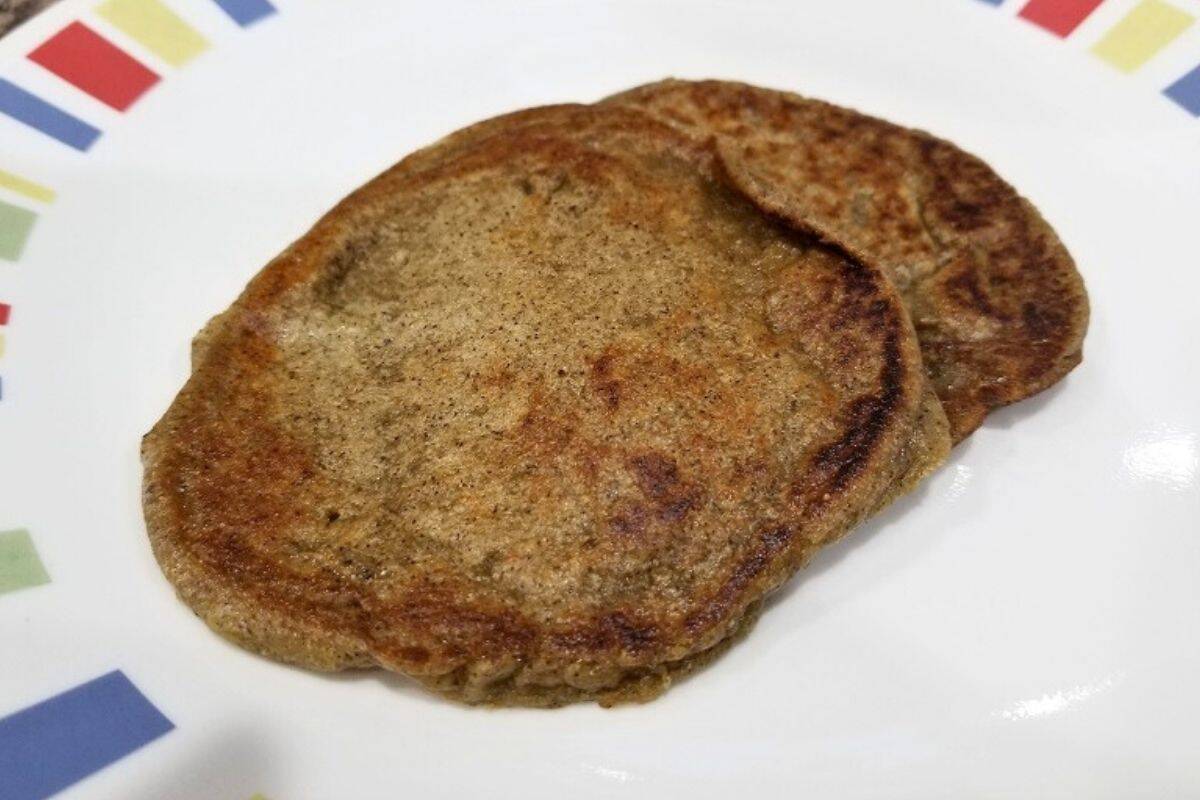
Step 8. Cook them for 2-3 minutes on the other side and then remove and serve. I heartily recommend maple syrup or jam, especially if you added protein powder, but if you didn't then you may want to try a nut butter of some kind.
🥥 Variations
- Blueberry Pancakes (Low Histamine Option): Fold in fresh or frozen blueberries just before cooking for natural sweetness and added antioxidants.
- Apple Cardamom Pancakes: Add finely grated apple and a pinch of ground cardamom for a warm, gently spiced flavor.
- Protein-Boosted Version: Use a tolerated low histamine protein powder such as collagen peptides or plain hemp protein for extra protein.
- Coconut Vanilla Pancakes: Replace part of the oat milk with light coconut milk and add a little extra vanilla powder for richer flavor.
- Banana-Free Sweet Pancakes: Increase coconut sugar slightly or drizzle maple syrup into the batter for added sweetness without using banana.
- Savory Herb Pancakes: Omit sweetener and vanilla, then add chopped parsley or chives and a pinch of garlic powder for a savory breakfast option.
- Extra-Fluffy Pancakes: Separate the flax mixture well and let the batter rest 5–10 minutes before cooking to improve texture and lift.
🍳 Freezing and Storage
I've kept these frozen for up to a month, but they should keep well in an air-tight container for up to 6 months. To store them for freezing, first let them totally cool to room temperature, and then layer them with wax paper in between for easy removal.
👨🏻🍳 Expert Notes & Tips
Adding Flavor: You can add blueberries, dairy-free white chocolate chips, nuts, even a swirl of jam directly into the batter or layered on top. In the fall sometimes I add apple butter or chopped granny smiths, but I may have to come up with an all-oat flour version for that!
Reheating Oat Milk Pancakes: To reheat directly from frozen, place the pancakes directly onto the rack of the oven or toaster oven and heat for 6-7 minutes at 400°F (205°C).
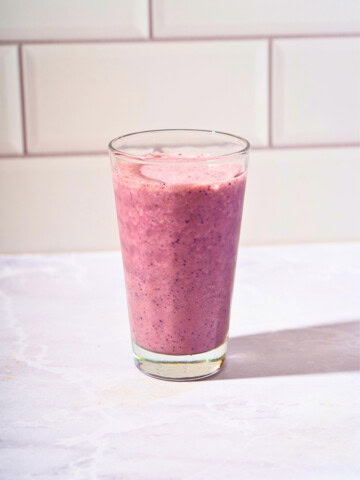
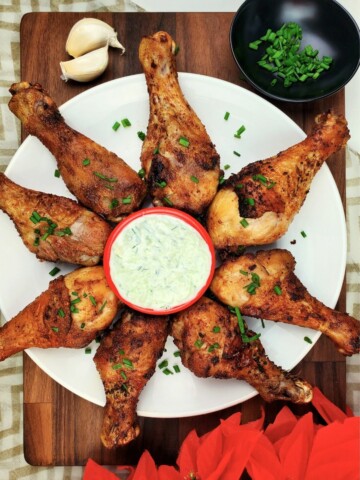
❓ What to Serve With Oat Milk Pancakes
🙋 Frequently Asked Questions
Yes, the ingredients are chosen to be generally low histamine–friendly when freshly prepared and using tolerated plant milks and toppings.
The flour blend helps create the best texture, so substitutions may change the softness and structure of the pancakes.
You can substitute rice milk, coconut milk (diluted), or another tolerated low histamine plant milk.
It acts as an egg replacement and binder, helping the pancakes hold together without gluten or eggs.

Have you tried this recipe?
If you like the recipe, please leave a 5-star ⭐️⭐️⭐️⭐️⭐️ rating on the recipe card, or even a comment! I love to hear how your recipes turned out, and your feedback can help other readers! Also join us on Instagram, Facebook & Pinterest.
📖 Recipe
Easy Oat Milk Pancakes (Dairy-Free, Egg-Free)
Equipment
- immersion blender
Ingredients
- 1 Tablespoon flax seed meal or psyllium husk
- 3 Tablespoons water
- ½ cup brown rice flour
- ½ cup oat flour certified gluten-free, if needed
- ⅓ cup arrowroot flour/starch
- ½ teaspoon sea salt
- ¼ teaspoon vanilla powder
- 1 ½ teaspoons baking powder
- 2 Tablespoons coconut sugar
- 2 Tablespoons protein powder optional
- 2 ½ Cups oat milk or water
- 3 Tablespoons avocado or coconut oil or butter/ghee, if tolerated
- Maple syrup optional
- Homemade jam optional
Instructions
- The first thing you need to do is prepare your egg replacement. If you'd prefer to use a regular egg, skip this very long step and omit the flax seed and the 3 Tablespoons of water. If using flax, in a large bowl, measure out 1 Tablespoon of flax seed meal. In another bowl or cup, measure out 3 Tablespoons of water, and grab a small hand blender or milk frother. Pour the water into the large bowl with the flax meal and immediately blend everything until well-combined. The powder will immediately begin to congeal and turn into your flax egg, so you need to stir quickly & thoroughly. If using psyllium husk powder, measure out your 2 ½ cups oat milk and 3 Tablespoons of water into a large bowl, then grab an immersion blender. Add your tablespoon of psyllium husk powder to the liquid and immediately blend everything thoroughly. Set aside your egg replacement.
- Now measure out all your dry ingredients into another bowl: brown rice flour, oat flour, arrowroot flour, sea salt, vanilla powder, baking powder, coconut sugar, and protein powder (if using). Pictured here is hemp protein powder (the green stuff), which did end up darkening the final pancakes.
- Your egg replacement should only take 2-3 minutes to finish thickening, so once you've measured your dry ingredients, add the oat milk to your flax egg and combine well. If you made a psyllium egg, your oat milk was already added.
- Now turn on medium-low heat under your pancake pan, and start it warming on the stove. While that heats up, add all your dry ingredients to the liquid and combine well, which should take about 30 seconds to a minute.
- Once the batter is well-combined, add a Tablespoon or so of butter or oil to your pan and let it melt for 30 seconds.
- Once the oil has melted, spoon about a quarter cup of batter per pancake onto your hot pan, where you melted the butter or oil. Allow the pancakes to cook on
- this first side until there are a lot of small bubbles forming on the surface, about 4-5 minutes. If you try to flip them too soon, they'll fall apart.
- When you flip the 'cakes they should be browned on the other side, and if they're not, give them more time on that side. You have to be a bit delicate with these, as part of the fluff comes from the use of baking powder, which creates delicate air bubbles.
- Cook them for 2-3 minutes on the other side and then remove and serve. I heartily recommend maple syrup or jam, especially if you added protein powder, but if you didn't then you may want to try a nut butter of some kind.
Notes
Nutrition
Save this post for later!
keira says
Oats are not gluten free and you can harm someone by saying they are!
Max says
You can get certified gluten-free oats, and if someone absolutely needs them to be certified gluten-free (with absolutely zero possibility of cross-contamination), and in that case that's the type of oat product they should use— but actually yes, oats are naturally gluten-free.