





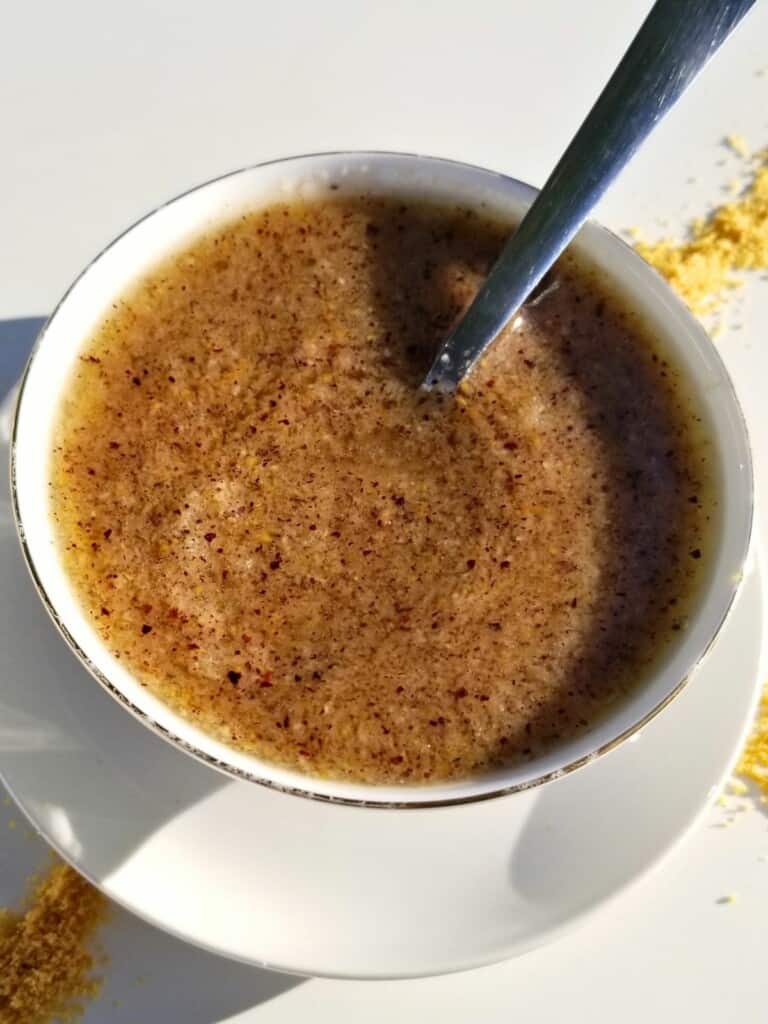
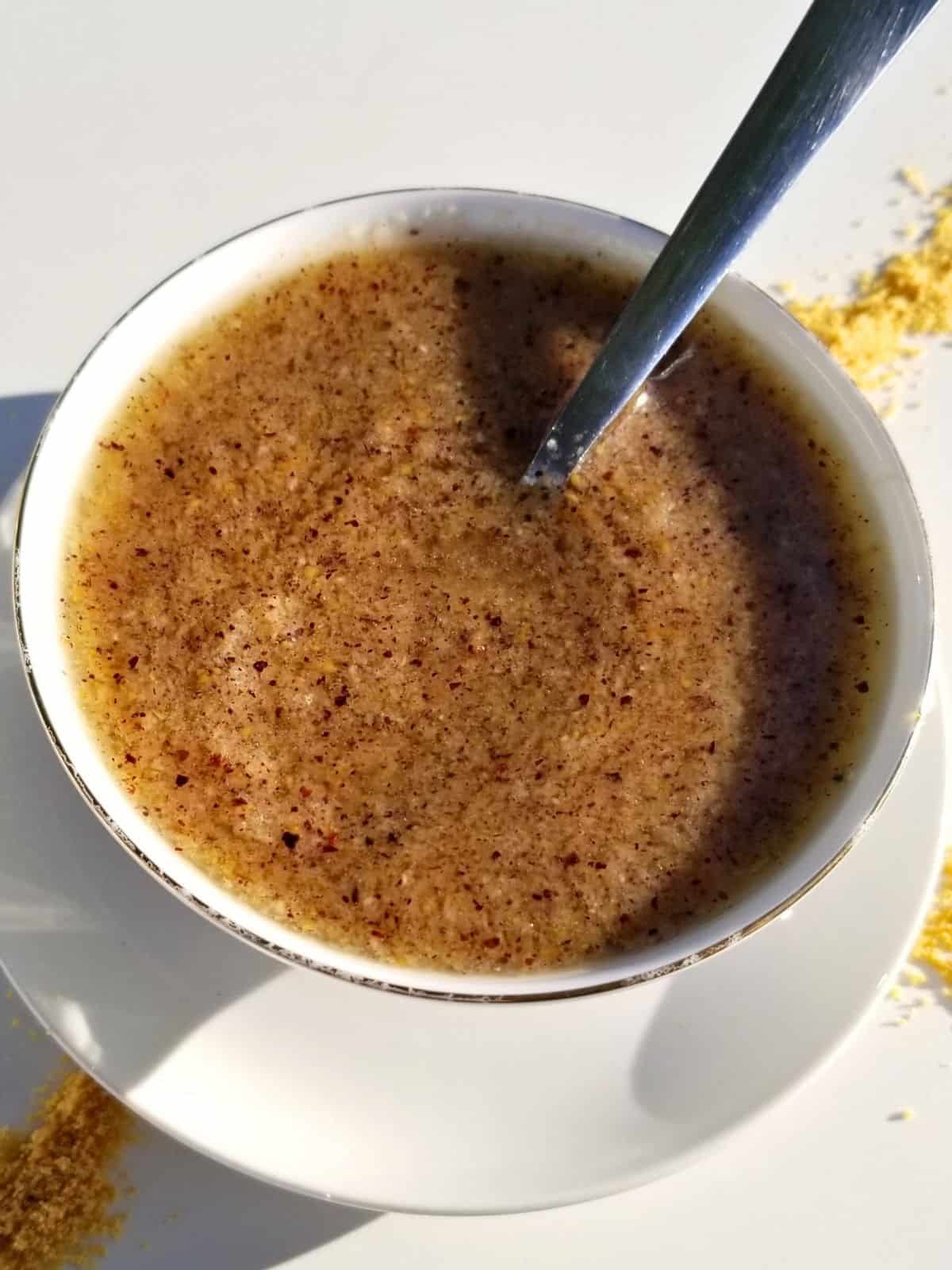
This low histamine mustard garlic sauce is a sharp, garlicky base for a variety of dishes, using mustard powder to emulsify oil & garlic into a versatile mustard aioli. Use mustard toum to top grilled meat, dress a salad, fry some broccoli, or flavor baked root veggies.
If you love flavorful garlic sauces, also try my classic toum and simple green garlic herb sauce.
Jump to:
✔️ Why This Recipe is Great
No Lemon Juice Toum: since many people with histamine issues don't do well with citrus, this low histamine sauce uses ground mustard seeds to emulsify the oil and garlic, creating a mildly thick sauce traditionally served with chicken & flatbread.
Low Histamine Sauce: while very sharp in flavor by itself, this toum blends well with a bit of homemade nut butter or seed butter to make a simple salad dressing or sauce for meat.
Use up Extra Garlic: this is a great low histamine way to use up any excess garlic from a recent haul or CSA, or even a bunch you found that's about to start going bad. It's very versatile, and a great flavor enhancer in soups!
🧂 Ingredients
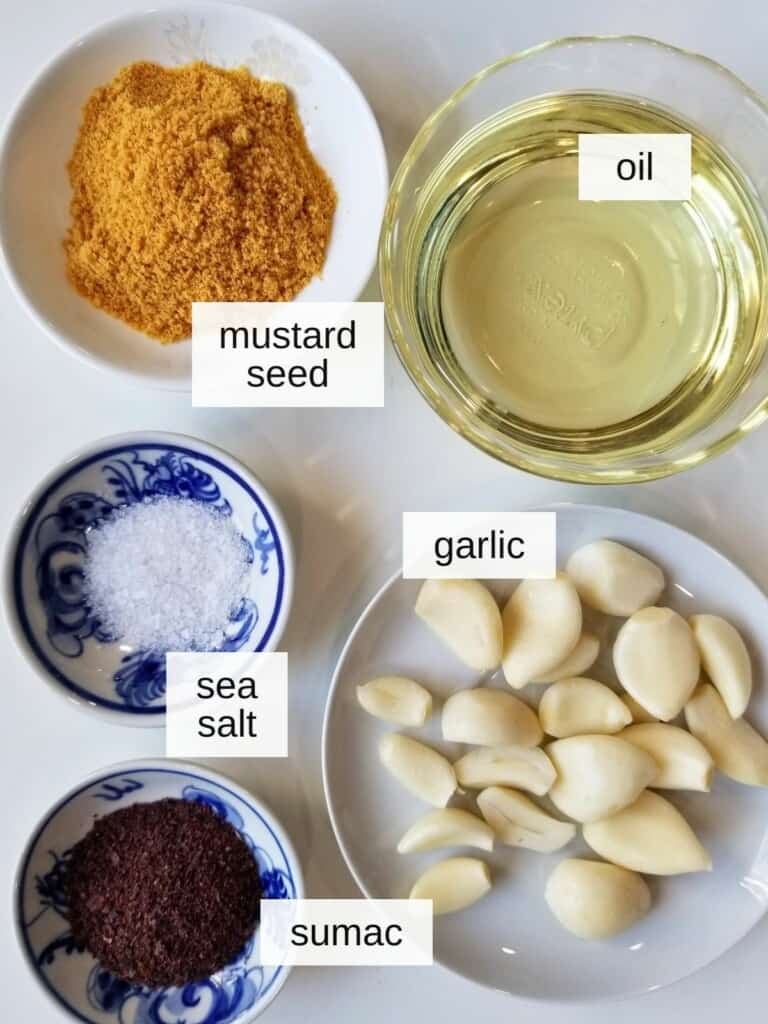
Peeled Garlic: these can be prepared yourself or purchased at an Asian market or Whole Foods near you, but it can take awhile to peel them in this quantity, so consider buying them pre-peeled.
Oil: you can use any neutral-tasting oil, but I recomment light olive oil or refined coconut oil, as tolerated (and depending on what you plan to use it for).
Mustard Seed: use the finely ground powder obtained from dried mustard seeds, not the whole seeds. This acts as an emulsifier in place lemon juice, the more traditional choice.
Sumac: this red-hued spice is actually a ground-up dried berry with strongly antihistamine and acidic properties. It adds tang and a bit of sourness to the toum.
See recipe card for exact ingredients and quantities.
🧄 How to Make Mustard Toum (Step-by-Step)
Step 1) Peel all garlic and remove any green stems in the middle (cut each clove length-wise in order to see if there's any green).
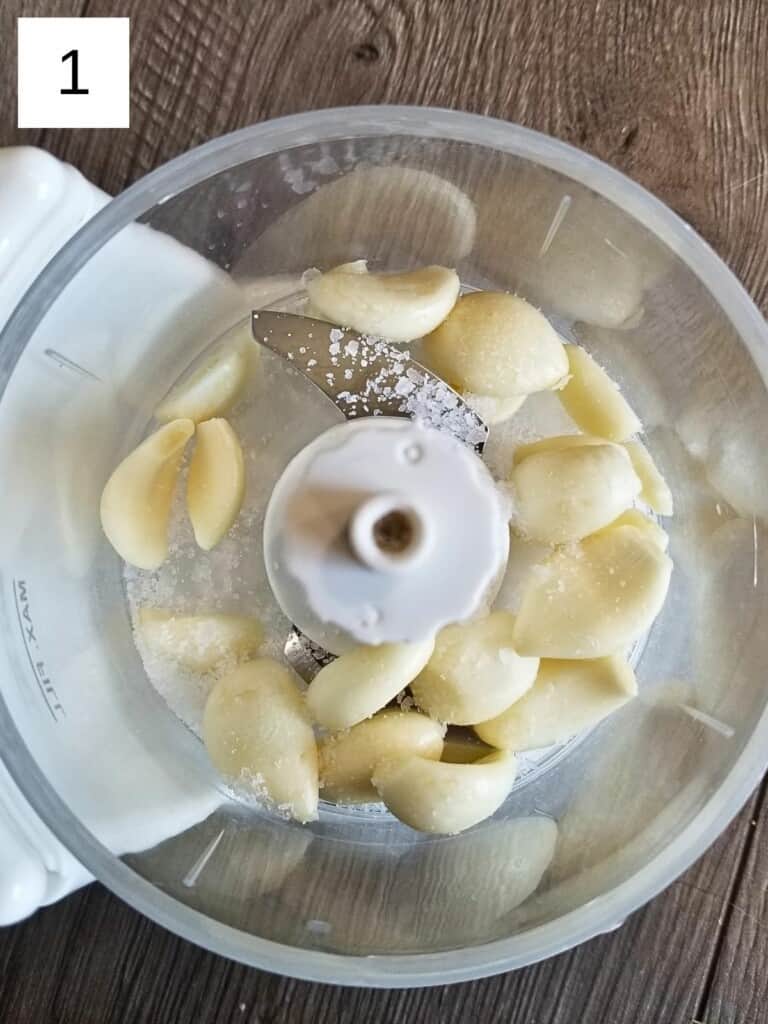
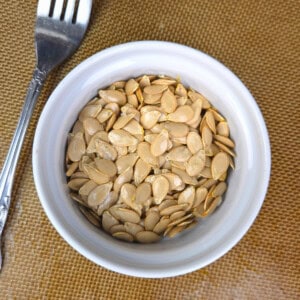
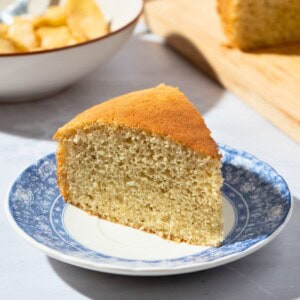
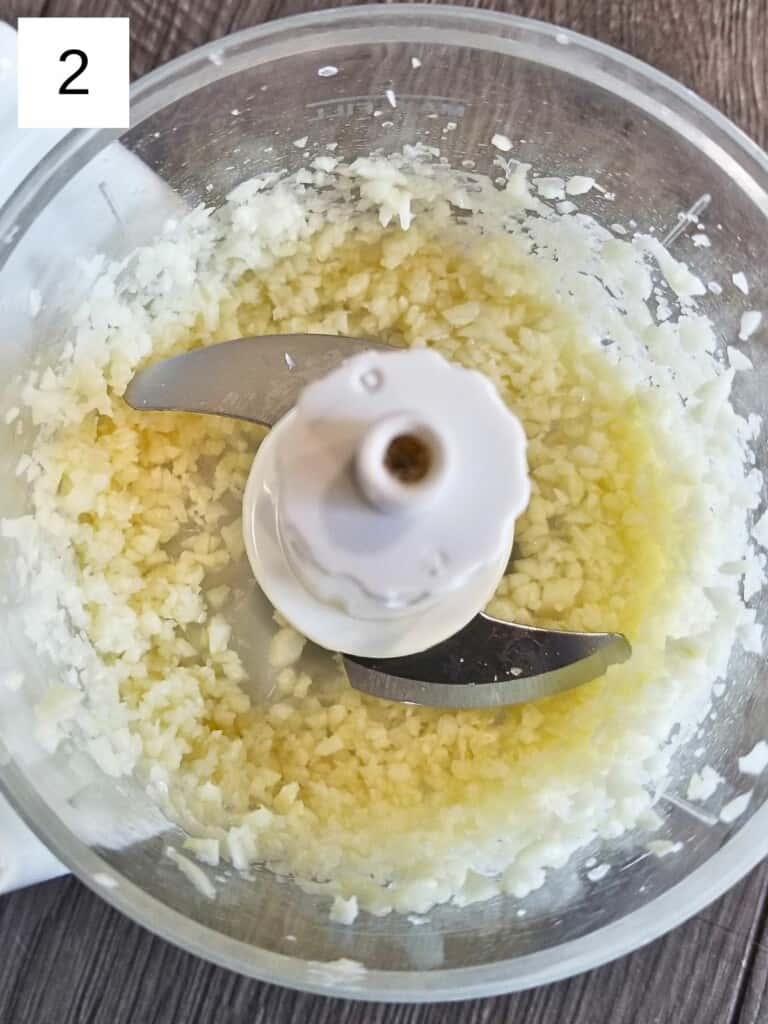
Step 2) Add garlic and sea salt to your food processor (image 1), then pulse them for 30 seconds in five-second intervals, until well-balanced and fully minced (image 2). You'll want to scrape down the sides halfway through.
Step 3) Add 2 teaspoons of oil to the garlic mixture, ideally while the food processor is running (or if needed then all at once and immediately run the food processor and whip), then scrape down the sides.
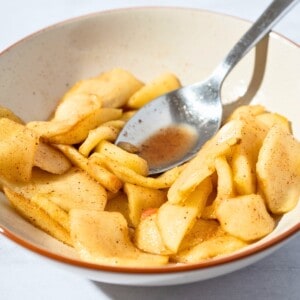
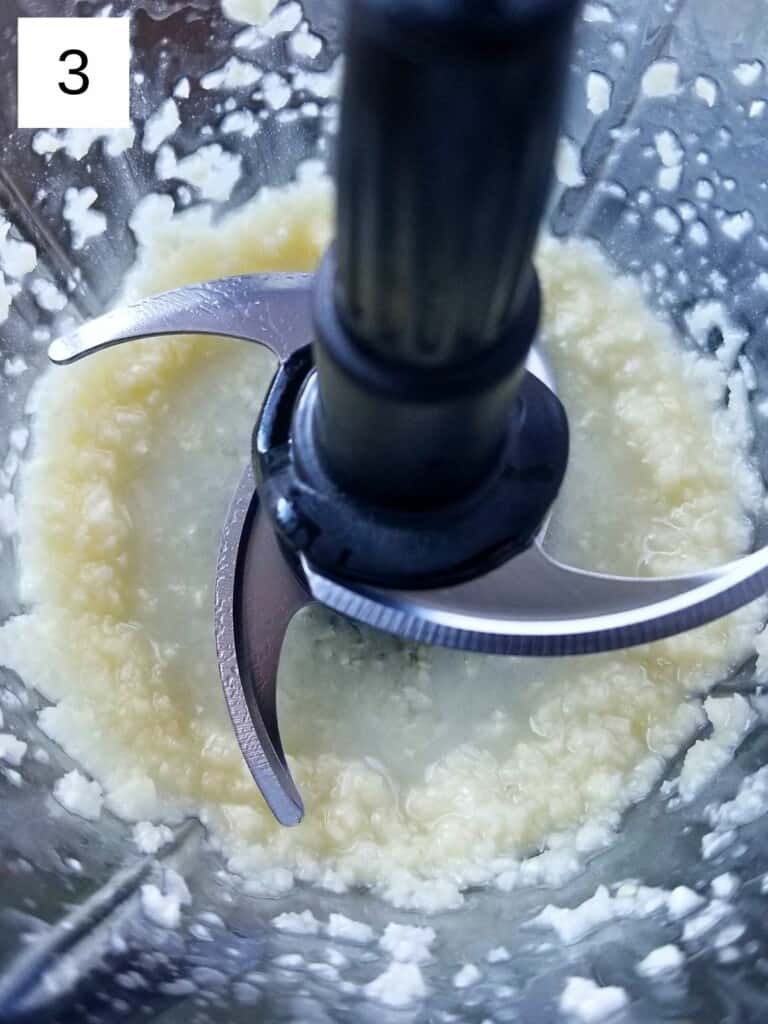
Step 4) Add another teaspoon or two of oil one at a time, ideally while the processor is running, and emulsify everything for 10 more seconds (image 3).
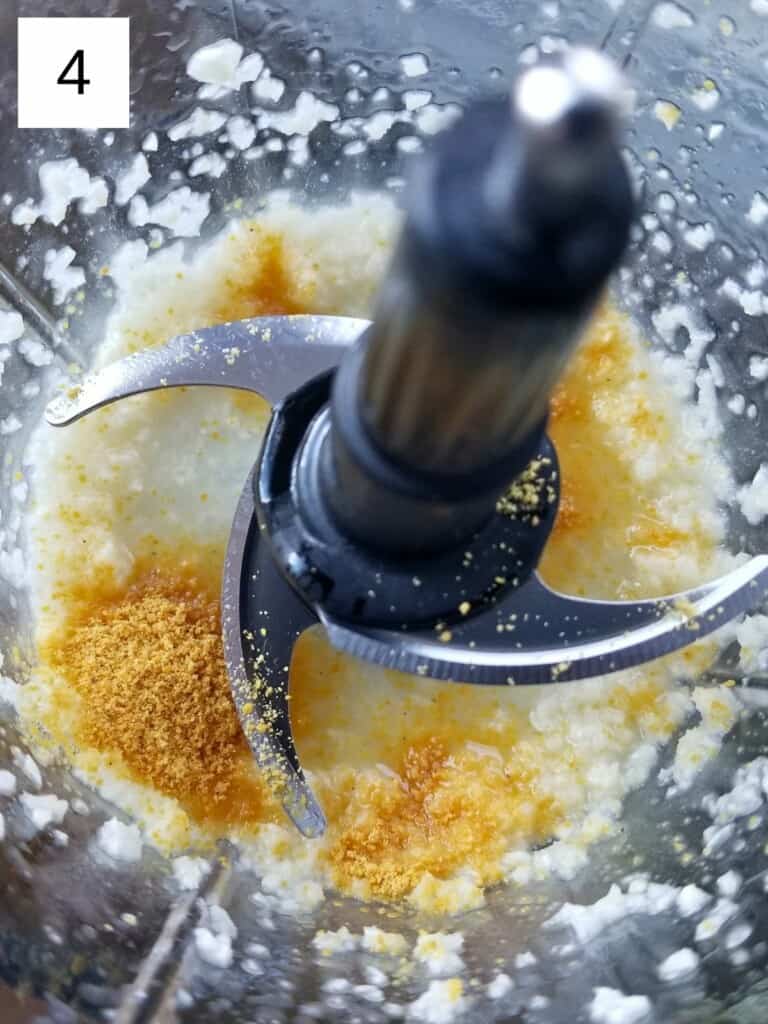
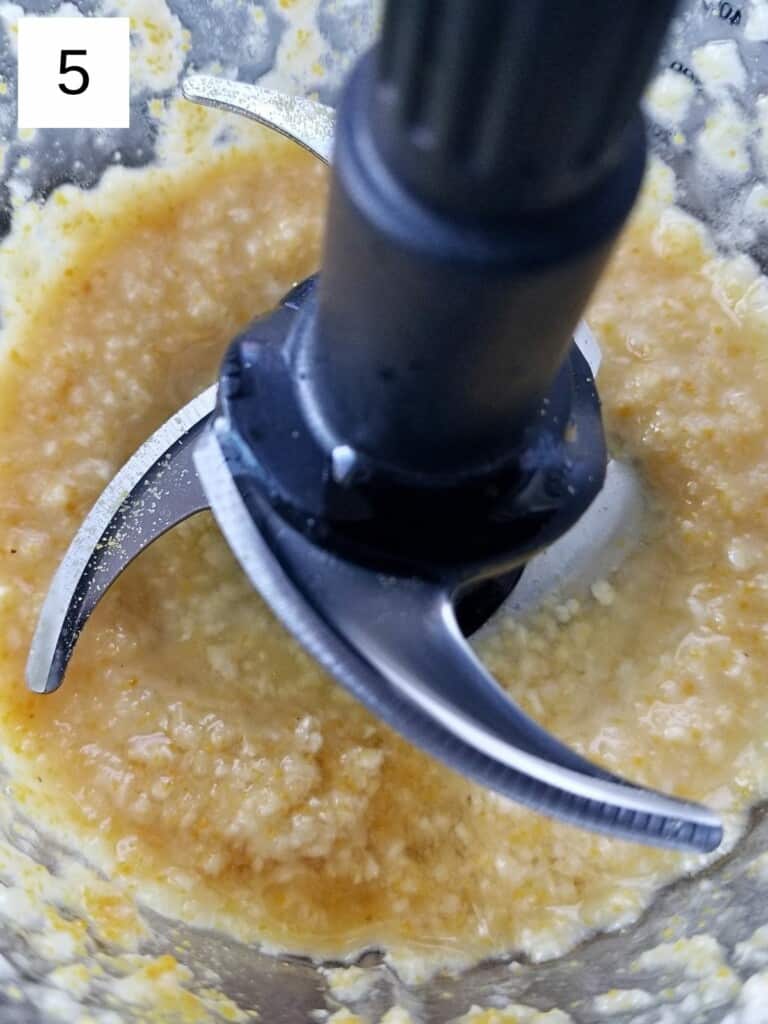
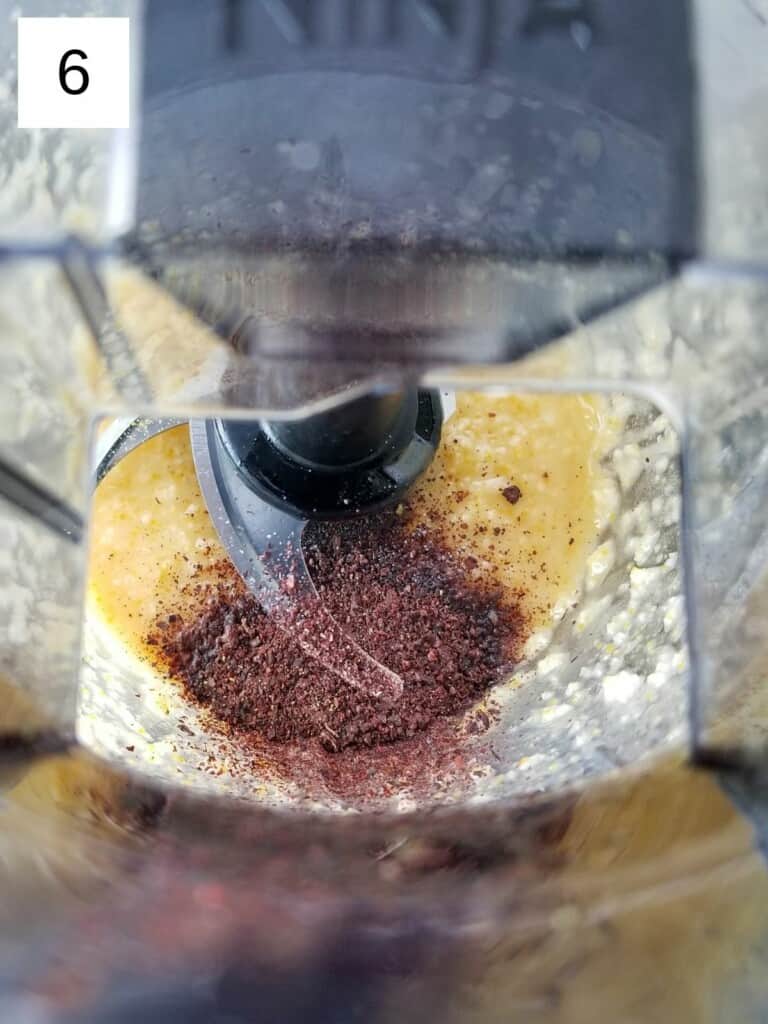
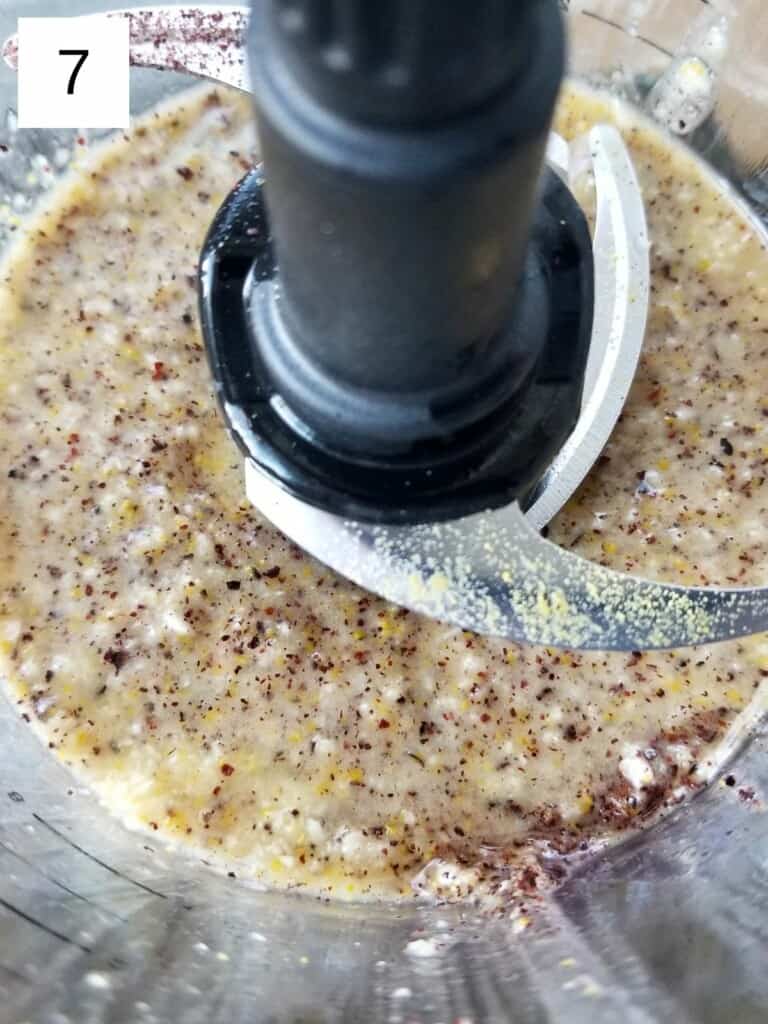
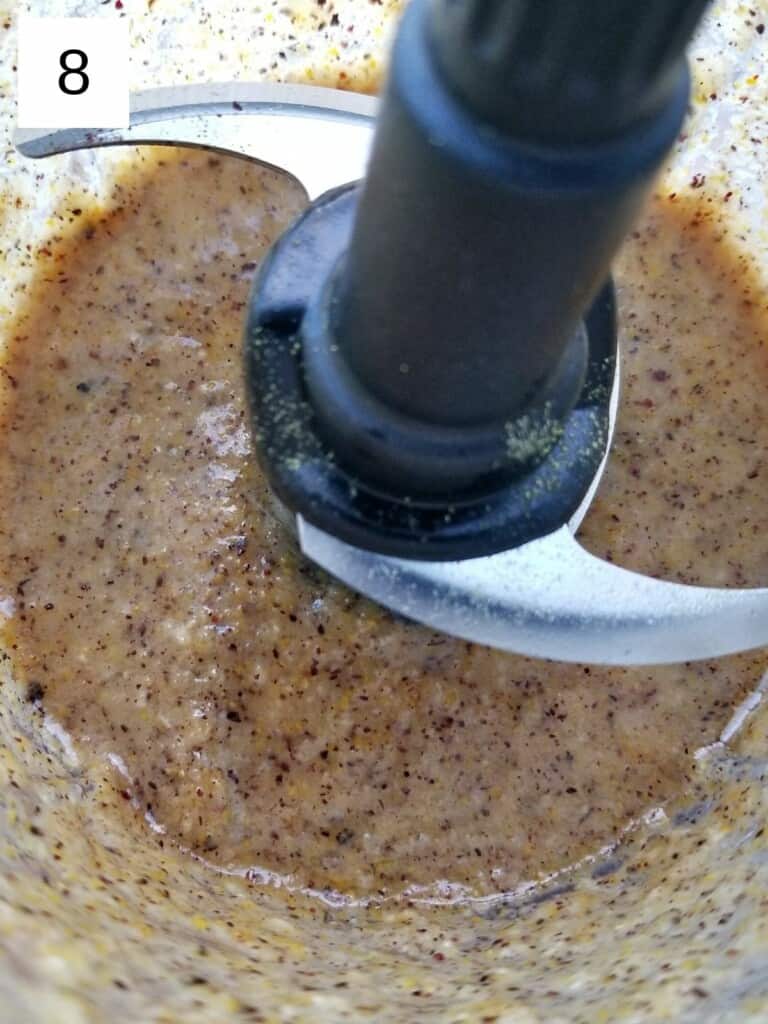
Step 5) Alternate adding a half tablespoon of the mustard powder or a tablespoon of the oil, alternating adding the sumac once the ground mustard has all been added (images 4-6). If you add the powders or the oil too quickly, it can break the emulsification, so carefully blend the mixture well between additions.
If the emulsification isn't too thick at the end, you may not need to add the final tablespoon of oil, so add everything slowly (images 7 & 8). Once everything has been added, your sauce is done! Careful, it's sharp.
🫚 Variations
- Roasted Garlic Toum: Replace half of the raw garlic with lightly roasted garlic for a milder, slightly sweeter flavor.
- Herbed Toum: Blend in 1–2 teaspoons of finely chopped fresh herbs like parsley, basil, or thyme for a fresh herbal twist.
- Extra Tangy Toum: Increase the sumac slightly or add a pinch of amchur powder for additional tang without lemon juice.
- Creamier Version: Slowly blend in an extra tablespoon or two of oil while emulsifying for a thicker, fluffier texture.
- Spiced Toum: Add a pinch of ground coriander or fenugreek for a subtle warm spice note.
- Garlic-Ginger Toum: Add ½ teaspoon freshly grated ginger to bring a gentle warmth and depth of flavor.
🫙 Freezing or Storage
Honestly, I don't recommend freezing toum, as it will definitely break the emulsion that makes it so fluffy, and will weaken the flavor from the mustard powder. However you can easily cut the measurements in half or a third to make less sauce at once, still following the instructions as written.
For low histamine eaters, you'll want to quickly store the sauce after eating, and use it within 2-3 days, though if you don't eat a low histamine diet, the toum will keep well stored in the fridge for up to 10 days. I like to make a large batch, and then use it in other dishes when doing low histamine meal prep, as it won't be important to maintain the emulsion once it's mixed into another dish.
👨🏻🍳 Expert Notes & Tips
Removing Green Stems: it's very important to remove the germs growing inside older garlic, as that's the base for a bitter-tasting sprout that will ruin both the flavor and emulsification of your sauce.
Sweetening the Sauce: this is great for baking thanks to the high oil content, but adding a bit of honey or maple syrup would balance out the flavor even more; consider 1 Tablespoon of either per batch.
🥗 What to Do With Mustard Toum
- blend it with tahini to make a simple salad dressing
- toss your brussels sprouts in it & then bake
- smear it on crackers or bread with a bit of cream cheese (if tolerated)
- bake your favorite cut of chicken in mustard toum, with a drizzle of honey on top
- blend it into eggs with a bit of baby kale for a zingy morning omelet
🙋 Frequently Asked Questions
Mustard toum can last for up to one week in the fridge or up to two years if properly stored in the freezer, though it loses its emulsification once frozen.
You could use lime juice, apple cider vinegar, white vinegar, or mustard powder.
If your toum is still too oily, add more mustard seed powder to strengthen the emulsification.

Have you tried this recipe?
If you like the recipe, please leave a 5-star ⭐️⭐️⭐️⭐️⭐️ rating on the recipe card, or even a comment! I love to hear how your recipes turned out, and your feedback can help other readers! Also join us on Instagram, Facebook & Pinterest.
📖 Recipe
Mustard Toum (Without Lemon Juice)
Equipment
- Food Processor or blender
Ingredients
- ¼ Cup garlic cloves peeled
- ½ teaspoon sea salt
- ½ cup oil
- 2 Tablespoons ground mustard seed
- 1 teaspoon sumac
Instructions
- Peel all garlic and remove any green stems in the middle (cut each clove length-wise in order to see if there's any green).
- Add garlic and sea salt to your food processor, then pulse them for 30 seconds in five-second intervals, until well-balanced and fully minced. You'll want to scrape down the sides halfway through.
- Add 2 teaspoons of oil to the garlic mixture, ideally while the food processor is running (or if needed then all at once and immediately run the food processor and whip), then scrape down the sides.
- Add another teaspoon or two of oil one at a time, ideally while the processor is running, and emulsify everything for 10 more seconds.
- Alternate adding a half tablespoon of the mustard powder or a tablespoon of the oil, alternating adding the sumac once the ground mustard has all been added. If you add the powders or the oil too quickly, it can break the emulsification, so carefully blend the mixture well between additions. If the emulsification isn't too thick at the end, you may not need to add the final tablespoon of oil, so add everything slowly. Once everything has been added, your sauce is done!
R says
allergy to sumac. Substitution ideas?
Max says
Amchur (also spelled amchoor) is dried green mango, and is a fantastic swap for sumac.
Sara H says
Hi!
I would like to make this but I don't see the amount of sumac to add. Thank you for the recipe I look forward to having a condiment that I can eat. I'll probably freeze it in ice cube trays.
Max says
I'm so sorry, Sara! I'm not sure how that got left off, but it's 1 teaspoon for one batch. I hope you enjoy it! A little goes a long way, for sure, so try small amounts at first!