


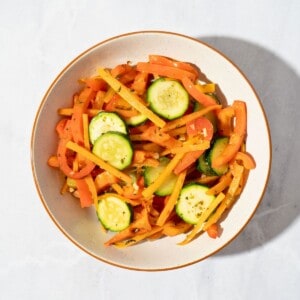

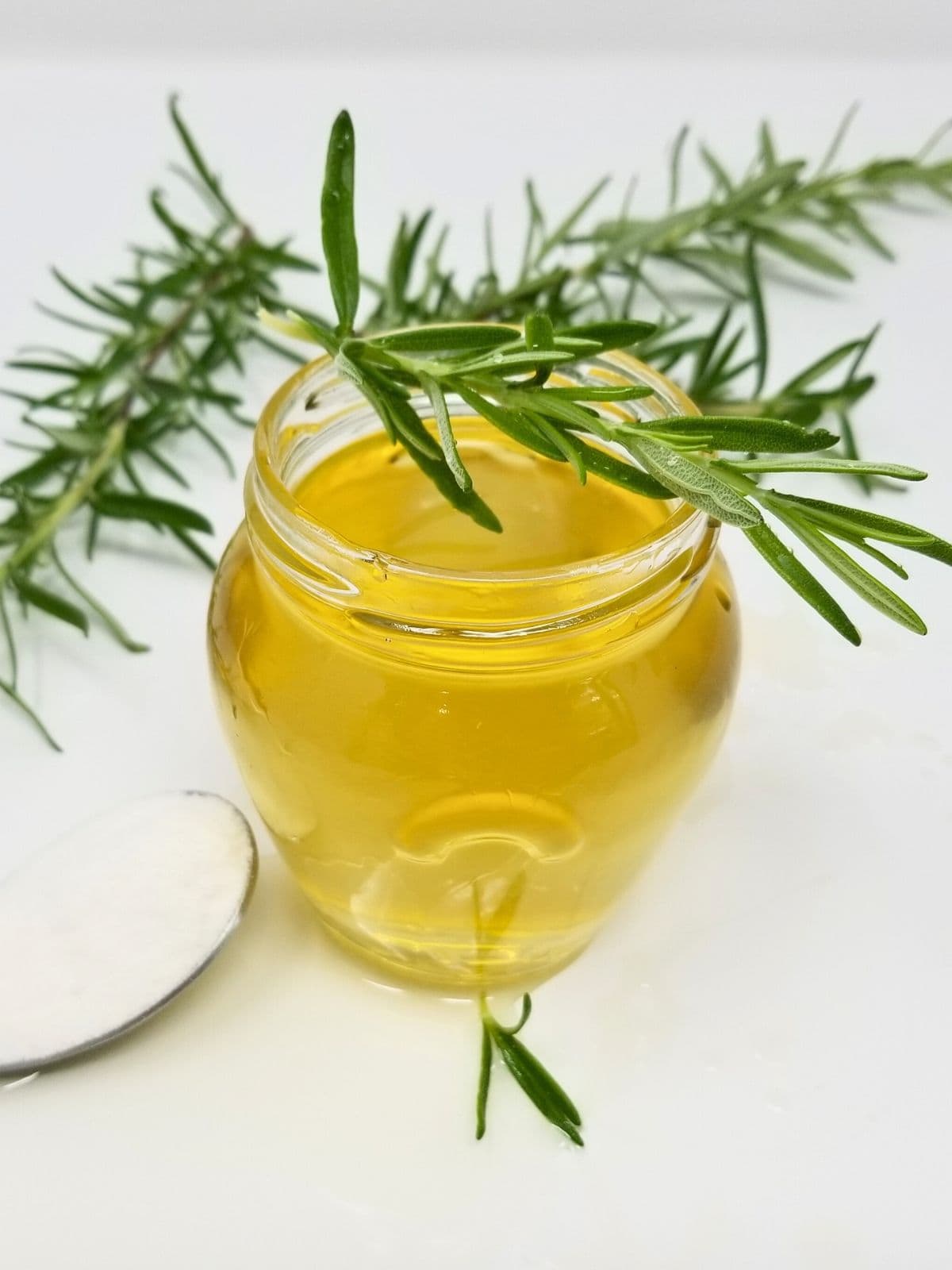
This 3-ingredient Rosemary Simple Syrup may look intimidating if you've never made your own simple syrup, but it's very forgiving and comes together with just a bit of good timing. You can use it to sweeten your favorite hot or cold teas, smoothies, mocktails, coffee, and fruit salads.
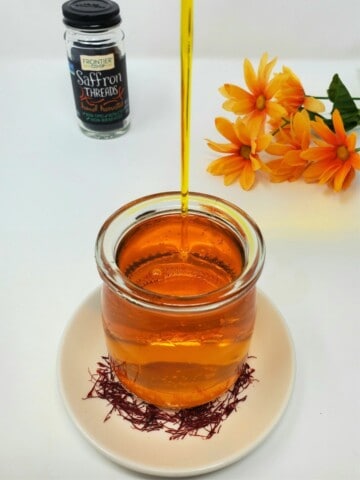
If you love homemade simple syrups, try my saffron syrup or thai basil syrup.
Jump to:
✔️ Why This Recipe is Great
'Simplify' Your Beverages: whether making an iced basil tea in the summer or drinking hot herbal tea in the winter, this homemade rosemary keto syrup will make it easy to sweeten drinks. From mocktails to lattes or tisanes, now you can sip more sweetly without worrying about an increased histamine burden.
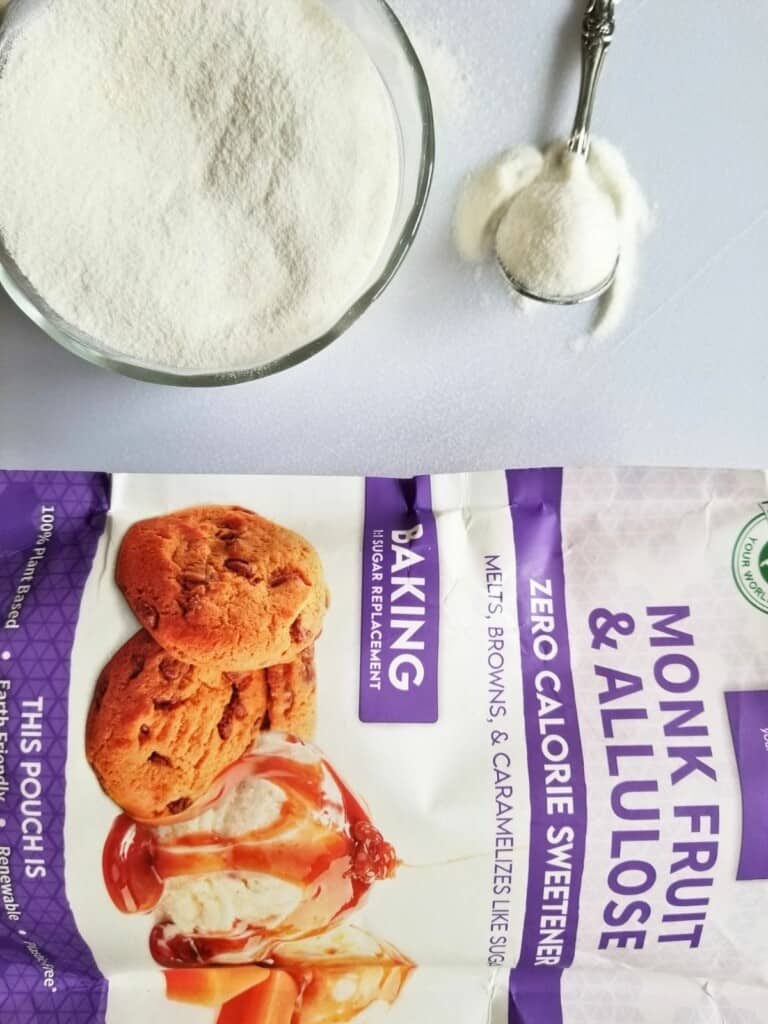
Histamine-Friendly Simple Syrup: unlike a traditional white sugar simple syrup, this allulose & monk fruit-based version is virtually calorie-free & not inflammatory, making it a low histamine sweetener. All in all the allulose & monk fruit blend I use can be replaced 1:1 for sugar, but like with any other food, allulose should be (re)introduced to your diet slowly, and then moderately, and then in full portion sizes.
Long Lasting: you can store this homemade sugar-free rosemary syrup in the depths of your freezer for up to six months (or even a year, if stored particularly well), so you can make a larger batch and keep using it for a whole season. The same goes for my other syrups, like passion fruit syrup and brown sugar syrup.
🌿 Ingredients
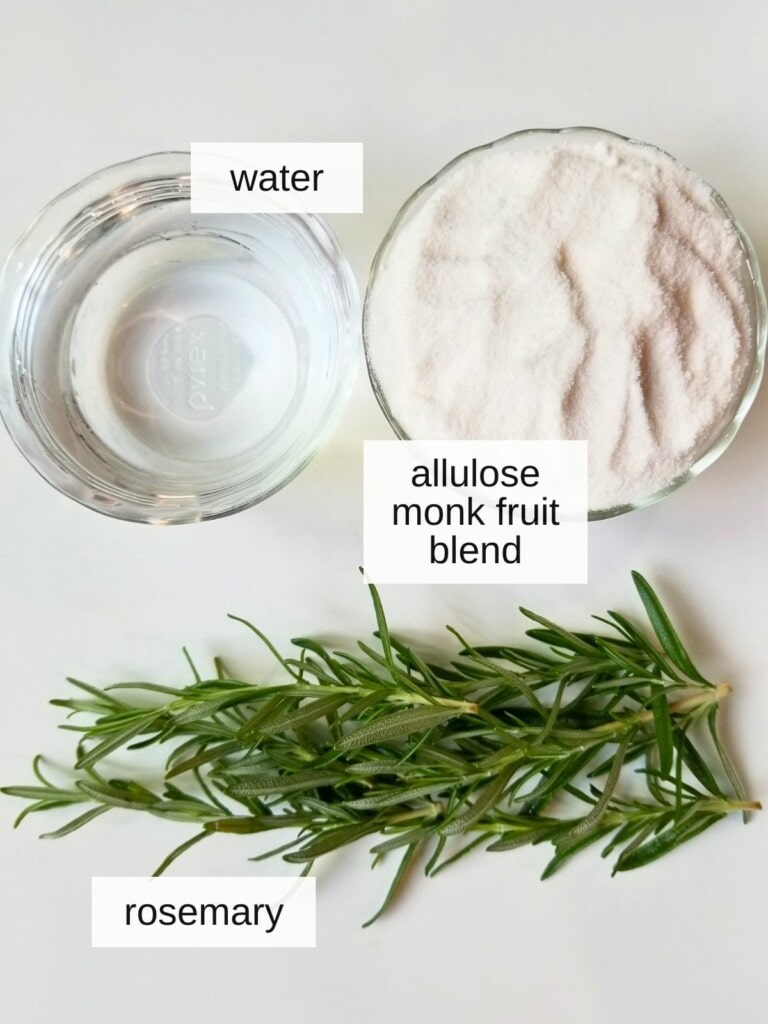
Fresh Rosemary: make sure you use fresh rosemary leaves rather than dried to impart the flavor to this rosemary simple syrup; you can find them in your local organic market or grocery store.
Allulose & Monk Fruit: other than water & rosemary, the only ingredient in this keto syrup is my favorite allulose & monk fruit sweetener blend, which to me has no aftertaste. However a very small portion of the population are super tasters, and to them allulose &/or monk fruit may taste somewhat bitter. Make sure you're not one of those people before you invest in a very large bag for mocktail-making.
See recipe card for exact ingredients and quantities.
🍵 How to Make Rosemary Syrup (Step-by-Step)
Step 1) Heat the water and allulose in a metal-bottom pan until just simmering and the sweetener has fully dissolved (images 1 & 2).
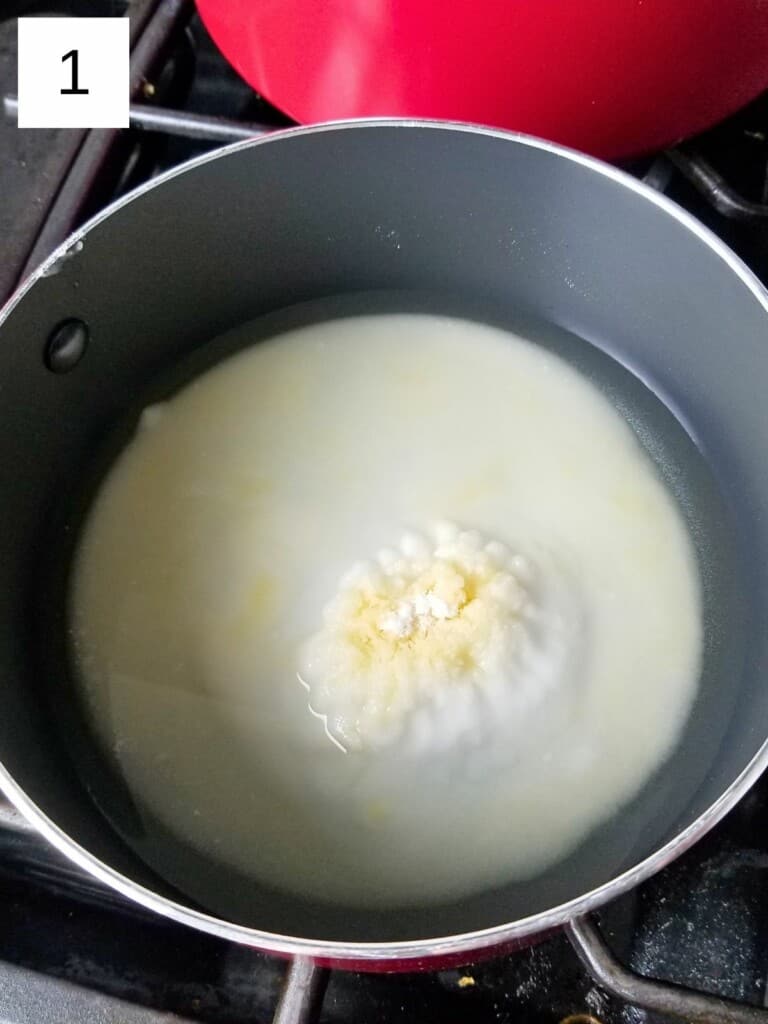
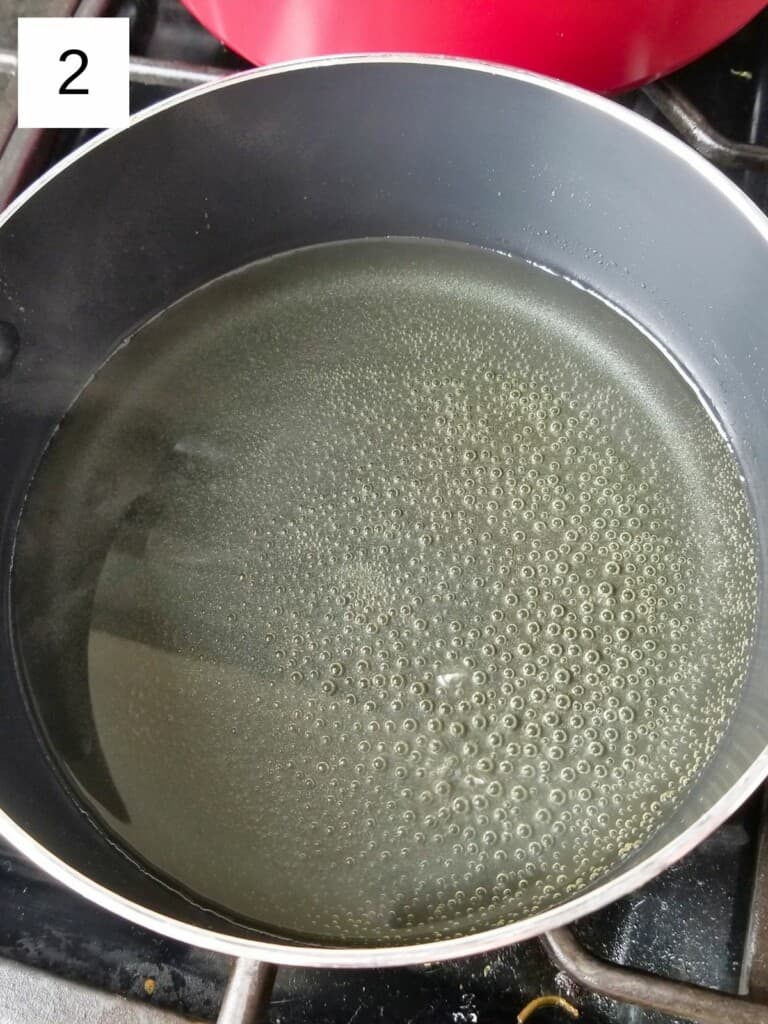
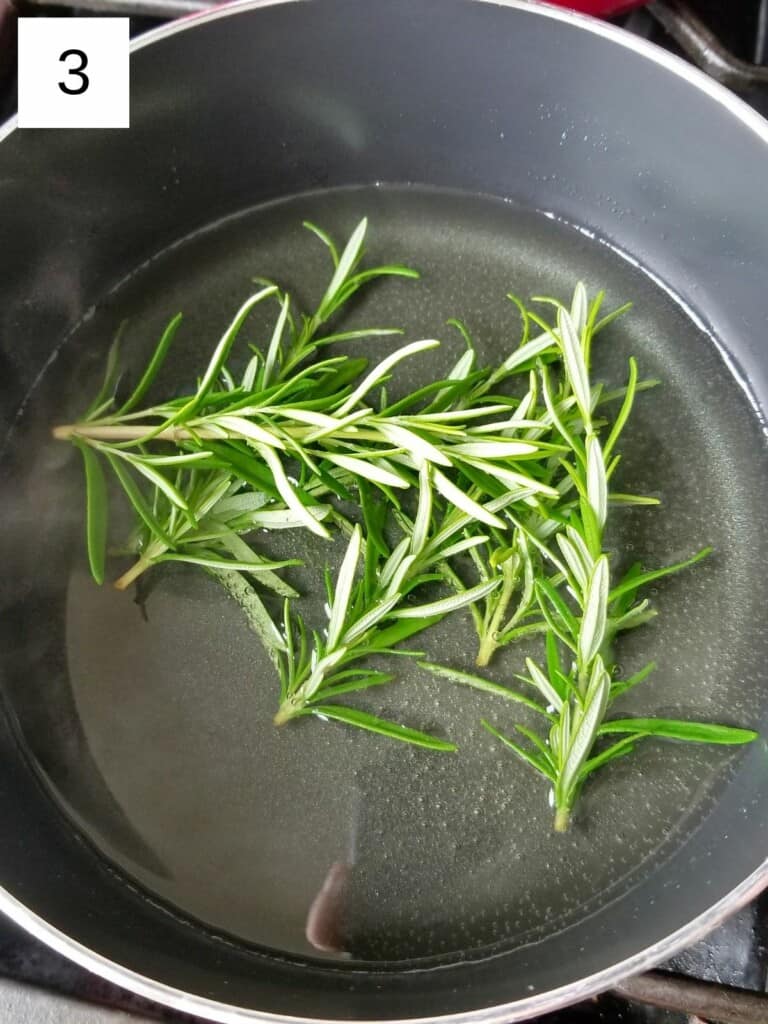
Step 2) Then pour in the well-cleaned rosemary (image 3), and stir everything together. Heat the rosemary mixture on low for five minutes (set a timer), never letting it get above a simmer, stirring occasionally.
Step 3) When your timer goes off, remove the mixture from the heat and let it sit on a cool burner for 30 more minutes (to infuse further) (image 4).
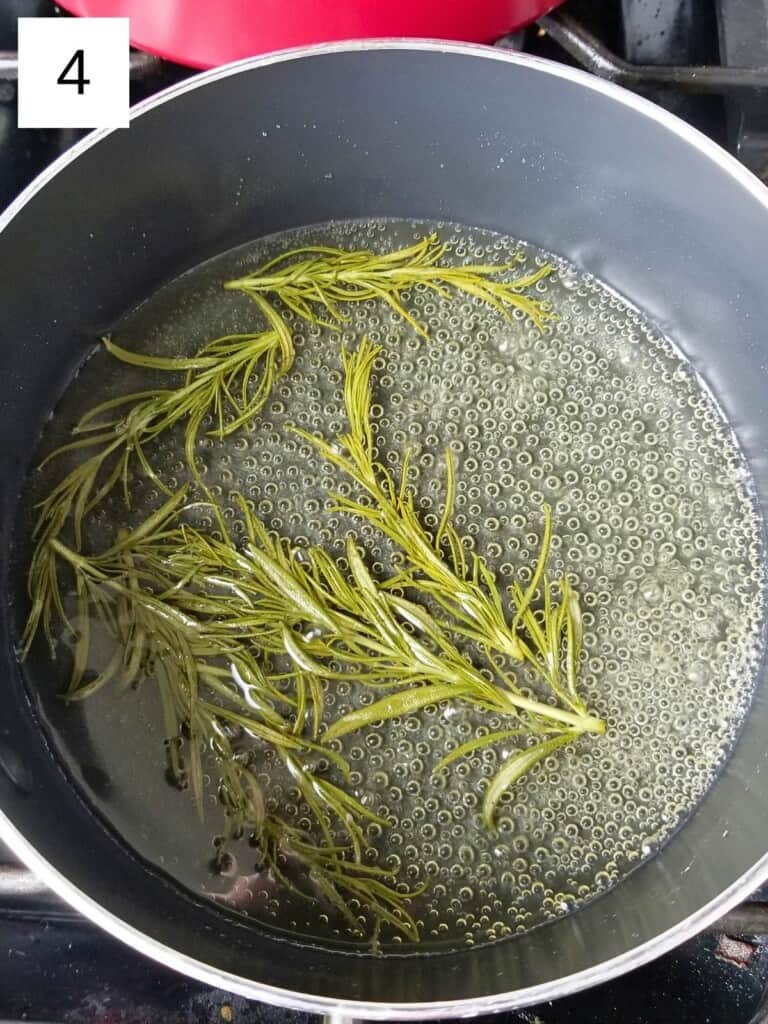
Step 4) Finally, just strain the mixture and preserve your keto rosemary syrup in a closed container in the fridge for up to 10 days.
🍋 Variations
- Use Different Sweeteners: Substitute allulose monk fruit blend with pure maple syrup or coconut sugar for a natural, low histamine sweetener.
- Add Citrus Zest: Infuse the syrup with a small amount of fresh lemon or orange zest to add brightness without increasing histamine.
- Include Fresh Ginger: Add a few thin slices of fresh ginger during simmering for a gentle warming flavor and anti-inflammatory benefits.
- Use Dried Rosemary: If fresh rosemary is unavailable, use a smaller amount of dried rosemary, adjusting to taste.
- Combine with Other Herbs: Add low histamine herbs like thyme or mint for a unique herbal twist.
- Make a Honey Version: For those who tolerate honey, replace the sweetener with raw honey for added depth and natural sweetness.
🥣 Storage and Freezing
Fresh rosemary simple syrup will stay good in the fridge for up to 7 days, but will stay good frozen for 6+ months without losing any flavor (if stored in an air-tight bottle). For low histamine readers, freezer storage is recommended after a few hours cooling air-tight in the fridge or an hour at room temperature.
👨🏻🍳 Expert Notes & Tips
Using Dried Rosemary: I haven't tried making rosemary simple syrup with dried rosemary, but since it makes such good rosemary coffee, I know the essential oils are just as extractable in the dried stuff. Again, I haven't tried this, but I'd use one tablespoon of whole dried rosemary and extend the extraction time by one hour, or use 50% more fresh-frozen rosemary sprigs (i.e. 9 sprigs each ~4" long).
Swapping Sweeteners: You can use this method and this ratio with a number of other granulated sweeteners to make rosemary simple syrup, but it won't work with powdered sugar or granulated stevia due to the consistency. Some other sweeteners you could try it with are liquid stevia, brown sugar, coconut sugar, date sugar, panela, and jaggery.
Corn Allergies: If you have any issues with corn, make sure to buy allulose from a company which specifically doesn't source their allulose from corn, as much allulose is manufactured from corn. However it's also found in small amounts in figs, raisins, wheat, maple syrup and molasses.
At roughly five times the price of white sugar, allulose can be a hard sell. But for those who choose to splurge for it, allulose has none of the inflammatory effects, doesn't cause tooth decay, has no calories, and has no effect on insulin levels, unlike sugar.
❓ What to Serve With Rosemary Syrup
🙋 Frequently Asked Questions
It takes about 5 active cooking minutes to make a flavored simple syrup, though due to the infusion time, add another half hour inactive time.
Yes, in order to properly dissolve all of the sugar crystals, it's important to heat the water enough that even the largest sugar crystals melt and the two substances liquefy.
Yes! While a typical flavored simple syrup is made with refined white sugar, for a deeper more caramelized flavor, you can substitute the same amount of brown sugar (though it will no longer be sugar-free).
Yes, you can flavor your simple syrup with any other fresh or dried botanicals(though how much to use will vary), such as vanilla, lavender, or saffron. You could also add a food-grade essential oil to flavor it afterwards.

Have you tried this recipe?
If you like the recipe, please leave a 5-star ⭐️⭐️⭐️⭐️⭐️ rating on the recipe card, or even a comment! I love to hear how your recipes turned out, and your feedback can help other readers! Also join us on Instagram, Facebook & Pinterest.
📖 Recipe
Rosemary Simple Syrup (Sugar-Free Option)
Ingredients
- 6 sprigs fresh rosemary 4" long
- 1 Cup allulose monk fruit blend or sugar
- ¾ Cup water
Instructions
- Heat the water and allulose in a metal-bottom pan until just simmering and the sweetener has fully dissolved.
- Then pour in the well-cleaned rosemary, and stir everything together. Heat the rosemary mixture on low for five minutes (set a timer), never letting it get above a simmer, stirring occasionally.
- When your timer goes off, remove the mixture from the heat and let it sit on a cool burner for 30 more minutes (to infuse further).
- Then strain the mixture and preserve your keto rosemary syrup in a closed container in the fridge for up to 10 days.

Comments
No Comments